Album review
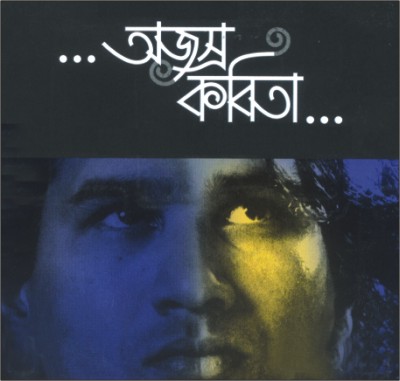
Swani Zubayeer's 'Ajossro Kobita'
Karim Waheed
Though ghazals originated in Persia and later attained popularity in North India after being adapted into Urdu, they have always had an ardent clan of admirers in our country. The passion became apparent when Kazi Nazrul Islam popularised the genre of Bengali ghazals. Nazrul's ghazals remain gems among classic Bengali songs. Unfortunately for the Bengali ghazal aficionados, the legacy did not have a smooth flow. In the last few decades only a few ghazal singers have emerged in our country with a handful of original Bengali ghazals. The '80s saw Niaz Mohammad Chowdhury rise to fame with the hummable Aaj ei brishtir kanna dekhey. After Niaz the genre pretty much went through a vacuum. Talented singer, songwriter and composer Swani Zubayeer proved that ghazals are his forte in the late '90s. His last album Nirjon Shakkhor (released in 2003) was very well received by music lovers. His recently released album Ajossro Kobita sounds promising as well. Zubayeer's USP is his extensive training and studies in music. He has been fortunate enough to receive tutelage under Ustad Mazhar Ali Khan and Jawad Ali Khan (grandsons of the legendary Ustad Ghulam Ali khan) of Kasur Patiala Gharana. The artiste has completed his Masters in Western Classical Composition from the Royal University College of Music in Stockholm. Zubayeer's strong foundation in North Indian classical and refined sense of western classical music has enabled him to create and sing some memorable ghazals in the new album. The first number Shurer jadukor does what an album opener should: instantly grab the audience's attention and keep that impression intact. Brilliant pieces of santoor, flute and harmonium accompanying Zubayeer's velvety vocals make the number a quintessential melodious ghazal. The next song Emon keno hoy starts off with an effect of harmonica; reminds one of the happy-go-lucky adhunik songs of '40s and '50s. Biponno poradhinota and Neel akash kalo holey, third and fourth song of the album are somewhat mediocre or above average. Zubayeer makes another eloquent impact with Shobai janey. Lyrics that can be easily absorbed, a tune that's simple yet emotive and the singer's effortless rendition -- the song demonstrates all the qualities required to be catchy. Perhaps the highlight of the album are the last two songs - Keu keu ashey ei prithibitey and Kaal shara raat dhorey. A fusion of sarod and keyboard with harmonium create an apt nuance for the melancholy Keu keu...The ballad has all the potential to be the note ending a long wearying day. And as if to maintain a fine balance, the last song Kaal shara raat, beginning with an alaap, sounds appropriate to start a new day. Presented by Tona Tuni, the quality production can be a treat to ghazal admirers, adhunik song fans, namely all Bengali music lovers.
|