IPDC plans securitisation,SME financing
Akfed Director Sultan Allana tells 'The Daily Star'
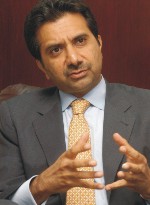
Sultan Allana (SA), Director of Aga Khan Fund for Economic Development (Akfed) that currently holds 68 percent shares of Industrial Promotion and Development Company (IPDC) of Bangladesh Limited, visited Dhaka recently. As representative of the lion's share holders, he has executive control over the affairs of IPDC, which went for public share offering in September. Allana is also chairman of Habib Bank Ltd since the bank's privatisation in February 2004. The Daily Star (DS) talked to him to know future planning and activities of the IPDC, set up in 1981 as the first financial sector institution to promote industrial development in private sector of Bangladesh. Excerpts:
DS: As a pioneer non-banking financial institution, in what direction is IPDC planning to expand its activities since things have changed so much both for the IPDC and national economy? SA: The economy of Bangladesh is growing and so is its financial industry. The additional capital the IPDC desires to raise through the public offering will position IPDC as one of the largest non-banking financial institutions in Bangladesh and this will greatly enhance its capacity to deliver. We plan to create new and innovative products to cater to the needs of the marketplace. Technology will play a key role and we are in the process of upgrading our platform for efficient delivery of financial services. New areas such as retail deposit mobilisation, SME financing, leasing and perhaps securitisation and other such instruments may be explored in due course. The management of IPDC also plans to focus on strengthening the human resource base in the company and the key areas of the business will be staffed with industry specialists. The management has also embarked on a capacity building programme and it has recently recruited fresh graduates through a competitive process. Going forward, we will continue to build the franchise and expand our outreach in other parts of the city and Inshallah in other parts of the country in due course. DS: Do you think IPDC will continue its role as a development financial institute? SA: Most certainly it will. Furthermore, in order to address the needs of the growing economy, IPDC will increase its product offering and the management is preparing to launch retail deposit mobilisation products and in due course it plans to expand to the SME sector. DS: Does Akfed have any commitment in Bangladesh in terms of development of human resources? SA: Akfed is also a lion's shareholder of Habib Bank and you may be aware that Habib Bank has recently increased capital in its branch operation in Bangladesh. With this increase, we are hoping to expand the outreach of Habib Bank in Bangladesh through opening more branches in the country for which a submission will be made to the regulators in due course. DS: What specific suggestions do you have for further development of the capital market in the country and what are your views on the potential for launching new financial instruments in the market? SA: Capital markets in Bangladesh have performed very well in the last 3 years and it has outperformed many other markets in the region. The other day I was encouraged to hear the views of the President of the DSE and I believe that they have progressive ideas, which will contribute to developing the market. From what I understand, they plan to introduce new products and with the increase in the remittance inflows, I think that the capital markets could be one of the major beneficiaries. However, I believe that it is also important to increase the number of listed companies to widen the base of the market in order to create interest and I hope that IPDC listing will be viewed as a step forward in this direction. DS: Since you have vast experience in facilitating investment, privatisation process, capital market, how do you look at these areas in Bangladesh? SA: I believe that the privatisation initiative is moving in the right direction. The recent successful privatisation of one of the largest banks in the country is a manifestation of this process. I think if this process is pursued, you will have a very interesting scenario as this will not only contribute to achieving greater efficiencies in the marketplace but also to benefiting the country through foreign direct investment.
|