Dhaka: Yesterday, today and tomorrow
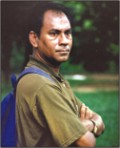
Sajahan Sarder is a bird specialist, president of Bangladesh Bird Watcher's Society and Secretary general of Nature Conservation Committee spoke to Wahida Mitu.The Daily Star (DS): What is your first memory of Dhaka?
Sajahan Sarder (SS): As a child I had to live in three places -- Narayanganj, Munshiganj and Dhaka -- because of the family business. I came to Dhaka in 1964 when I was about five or six years from Narayanganj by train. The station at was then Phulbaria. It was quite large and the hustle and bustle of busy people caught my attraction. Interestingly what caught my eye were the coolies in red dresses.
DS: What was Dhaka city like when you first came?
SS: I used to live in Old Dhaka, where rickshaws were the main method of transport. For those who travelled long distances used three-wheeled scooters. Dhaka then was a rather enjoyable place. Festivals and melas (fairs) took place every now and then; among them were the Muharram Mela, the night of Shab-e-Qadar, cockfights, and egg cracking festivals, Kawali programmes and many others. Hizra's (hermaphrodites) participated in different social activities at that time. They were a part of life. It is sad that Hizra's are looked down upon now. As the city expanded; the more civilised we became, the more we rejected the hizra community.
DS: What do you miss most in the city at present?
SS: Oh! I really miss lot of things -- the cordiality, hospitality, and festivals, the joyless, solitude in the city, the natural beauty of Dhaka and the Dhaka full of rickshaws. I also miss the Buriranga river and the pleasant scenery surrounding it. I miss the birds. In 1980's as a keen bird-watcher, I started the habit at different places in the city like the Ramna Park, at Segunbagicha, along Minto road, in the Buet and Dhaka University campus area and wetlands near the Ramna garden, and had the pleasure of watching various species of birds. But in the last two decades the number of birds, their species and biodiversity has reduced a lot. At that time, I remember watching over 80 different species of birds in Ramna in a day. But now there are only about 15 different species of birds that I watch in a day.
DS: What is your most memorable event in Dhaka?
SS: I formed the bird watchers society in 1989. I used to hang out at the Elderdo restaurant at the Aziz super market regularly, where I was able to encourage lots of people to watch birds. Later they became members of the society. The number of members increased gradually as I hung around the restaurant.
DS: How have the changes in the city influenced your life?
SS: I became a nature conservationist in the 1980's that I consider to be an influencing factor of the positive side of the city. The 70's era influenced me to practice philosophy, science, art and literature, while the 60's had influenced me as a revolutionary.
DS: Which part of Dhaka in your eyes, should we be proud of?
SS: We should be proud not of any special part of the city, but of the ancient trees which are our pride. Whenever I look at these trees, they make me feel that we are a civilized and ancient nation.
DS: Is today's Dhaka the city you want to live in?
SS: No, not at all. But it is difficult to go back to yesteryear. We had harmony among birds and animals, human beings and nature then. We have destroyed these bonds and encroached retention ponds and wetlands.
DS: What do you envisage for Dhaka in the future?
SS: If there is a chance to reconstruct Dhaka, we should plant more tress to give shade; arrange sufficient playgrounds, gardens and wetlands. If tress can be provided city dwellers will automatically be provided with birds also. Shrubs cannot meet this purpose. We need to reconstruct Dhaka for the better future; otherwise it cannot move forward.
|
|

