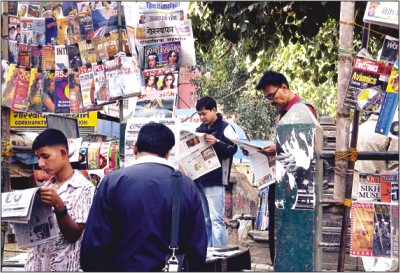
Nepal govt, Maoists clinch peace deal
King's future uncertain
Afp, Kathmandu
A cloud hung over the future of Nepal's god-king Gyanendra yesterday after Maoist republican rebels and the government clinched a historic peace agreement. The deal capped five tumultuous years since Gyanendra, 60, was vaulted to the throne by the massacre of his brother and most of the royal family staged by a drink-and-drug fuelled crown prince who later killed himself. King Gyanendra's Shah dynasty has a 238-year history in Nepal, and while the rebel Maoists insist they want a democratic republic, others still see the monarchy as important for the tiny country wedged between India and China. But even if Gyanendra remains monarch, he has already been reduced to a ceremonial role, stripped of his political powers and job as head of the army. The government has also passed legislation turning the world's once only Hindu kingdom into a secular state. Nepal's kings have for centuries been revered as incarnations of the Hindu Lord Vishnu, the god of protection. But republican sentiment has climbed sharply since Gyanendra sacked the government and seized direct power in February 2005 in what he said was a bid to crush the Maoist rebellion that has claimed over 12,500 lives. Massive pro-democracy protests in which crowds burnt him effigy and called him a "murderer" forced him to restore parliament last April. Since then the Maoists and the government have been inching towards Tuesday's deal under which the rebels would form part of the government. The rebels, fighting for the past decade to make Nepal a republic, have agreed to abide by the outcome of a people's assembly that will decide the monarchy's future. Since Gyanendra handed back power to parliament, the once high-profile monarch has virtually disappeared from public view. The royal motorcades that used to clog streets of the capital have halted as have his whistlestop helicopter tours of rural areas. Gyanendra's isolation was apparent in June when he marked his 60th birthday without the usual crowds of schoolchildren at the event and government ministers skipped the ceremony. The rotund monarch has been far less popular than his brother King Birendra, slain in what came to be known as the "Palace Massacre" that left ten royals dead. Shocked Nepalis found the official verdict that Crown Prince Dipendra was responsible for the massacre hard to believe, and Maoist rebels accused the king of stage-managing the killings.
|