Medical Update
Treatment of vitiligo
Dr Delwar Hossain
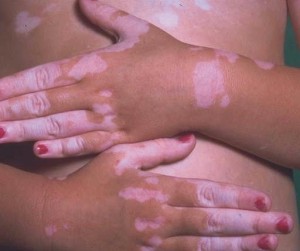
Vitiligo is a disorder of pigmentation, characterised by development of white patches over skin and mucosa after birth. It is a benign disease, yet it has a great potential to cause severe psycho-social sufferings of the patients.There are few therapeutic options to treat it. They include popular layman’s therapy, herbal therapy, homeo therapy, allopathic and modern therapy, surgery etc. But none of them are universally effective. The disease is well managed in the West and the Europe with the help of recommended guidelines. But in our country, its management is in a mess. With an objective to bring its management into line and making a functional guideline, we undertook several clinico-therapeutic studies in the out-patient department of USTC since 1999. Types of vitiligo
There are five types of vitiligo. Clinically they are distinct. They have different natural courses and prognoses and a tendency to response variably to treatment options. Vitiligo should be diagnosed on the basis of these clinical sub-types, such as focal vitiligo, segmental vitiligo, acro-facial vitiligo, vitiligo vulgaris and vitiligo universalis. It will help in choosing right treatment, motivating the patients and keeping their interest along the right track. But in our country, all patients are labeled as vitiligo. Treatment
Vitiligo is a chronic disease. Its treatment requires months to years (never ever days to weeks). It is an idiopathic disease and hence there is no specific and targeted treatment for it. Nevertheless, therapeutic armamentarium for vitiligo is rich now. Choosing right option for right patient at right time is the real deal. Medicinal treatment aimed at stimulation and migration of melanocytes (pigment carrying cells) from nearby reserve pool to white patches. It sounds helping our body to cure its own disease and hence there is least chance of development of new lesions once cured by medicine. Types and nature of disease, sites involved, presence of white hairs, availability of options, capability of patients, response to previous treatment etc. should be considered duly before choosing any treatment option. Patients must be well motivated for the treatment plan. Here are few comments on commonly used therapeutic options in our country. Heliotherapy: It is a treatment option where psoralen (paint or oral form) is used in conjunction with natural sunlight. Numerous combination forms are being used at the discretion of dermatologists. Modern version of this treatment is PUVA. It is a very good, cheap, safe and cost-effective option. It is found effective in all types of vitiligo. Unfortunately the way it is used in our country, patients develop severe local and systemic toxicity. They get afraid and are obliged to stop the treatment. It could be a “gold standard” treatment for our country if it is used judiciously by the patients and the physicians alike. Phototherapy (usually narrow band UVB): Here UVB (310-315 angstrom) is used to stimulate the melanocytes in the white patches and surrounding areas. The therapy is fairly effective for lesions over face, neck, trunk and proximal limbs. But it is not superior to medicinal treatment in terms of efficacy. It has been considered a good option in the field of vitiligo for the last 3-4 decades. Now it is revealed that it has long term risk of causing skin cancers. American national institute of health and World Health Organisation have reviewed and acknowledged its danger and expressed concerns. Patients and physicians should think several times before choosing this option in treating the vitiligo. Laser: It implies the therapeutic use of collimated and coherent light of a single wave length. It is designed to deliver ablative therapy in the field of surgery, for instance, eye-surgery, general surgery, dermato-surgery, cosmetic-surgery etc. Few Lasers have stimulatory effect on melanocytes and this character is being exploited in treating vitiligo. Patches over face, scalp, neck, trunk and proximal limbs may respond favorably to it but acral lesions are found non-responsive. However, Laser is not superior to medicinal treatment and definitely not effective in cases which are non-responsive to medicine. It was observed that some of our leading dermatologists prefer and refer vitiligo patients to laser treatment. Apparently this is not a prudent advice. Patients and treating physicians should be cautious and careful in choosing this option for treating vitiligo. Magic cure: Miracle may happen in the course of vitiligo. But there is no place for magic cure in the field of vitiligo. Vitiligo is one of the oldest diseases of the human history. But the causes, pathogenesis, specific and targeted treatment of vitiligo are yet to explore. Fascinating advertisements are simply ill-intentional, irresponsible and non-realistic. Surgical treatment (skin grafts and cell transplants): In this method, harvested melanocytes or functionally active melanocytes in the healthy epidermis or skin are transplanted in the vitiligo patches. It provides only palliative treatment to the white patches and the body’s own power to cure its disease is bypassed. Patients may develop new lesions after surgery. Indeed, it is a very costly treatment. Medical treatment is needed along with the surgical intervention. However, the surgery has an important role and it is a good option only for carefully selected patients. Patients who have their disease inactive and have limited number of lesions over surgically amenable areas are good candidates for surgery. On the other hand patients with acrofacial vitiligo and vitiligo vulgaris, having extensive and widespread lesions (particularly over acral areas) and unstable disease are not good candidates for surgery. But after adequate medical treatment they may be referred to surgery for left behind inactive patches. I have seen many patients, who have had surgery few years ago and developed new patches. It is really a regrettable and heartbreaking outcome. It could have easily been prevented if the surgeons and patients become careful in pre-surgical decision. Patients seeking surgical treatment should have their disease inactive first. Usually surgeons consider 6 months to 1 year inactivity sufficient. But this duration of inactivity is meaningless for focal vitiligo and segmental vitiligo because they are inborn stable. On the other hand for acrofacial vitiligo and vitiligo vulgaris, this duration is definitely inadequate. Because, like other chronic diseases, they may remain inactive for several months to few years and again be active. To my experience, 5 years continuous and un-interrupted inactivity should be considered adequate and they must have adequate medical treatment before going for surgery. Last but not least, surgery can be done within minutes but its final outcome (in terms of color, tone and natural consistency) may require long time (several months to years) to appear. Conclusion
Vitiligo is a curable disease. Multiple options (both medical and surgical) are available now in the country. Medicinal treatment is cheap, safe and curative. Patients should try this option first. On the other hand, surgery is beneficial only for carefully selected cases. This costly treatment should be used judiciously to ensure its outcome. The writer is an Associate Professor and Head, Department of Dermatology and Venereology of USTC, Foy’s lake, Pahartoli, Chittagong.
|