Lest We Forget
Syed Badrudduja
A champion of truth and justice
Syed Ashraf Ali
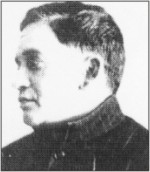
Syed Badrudduja, the indomitable champion of the down-trodden minorities in India, breathed his last on November 18, 1974. In the passing away of this brave soul, the people not only of India but of the entire subcontinent lost a great statesman, a matchless orator, an erudite scholar, a valiant fighter for truth and justice, and an honest politician with unimpeachable integrity. He commanded unstinted admiration and respect not only from the Muslims but also from persons of various walks of life and different shades of opinion.In 1969, a broad-based Committee was formed to pay a befitting tribute to Mirza Asadullah Ghalib, the legendary Doyen of Urdu literature, on his 100th birth anniversary. The Committee was a blazing galaxy which included brilliant luminaries like Suniti Kumar Chaterjee, Satyajit Ray, Tarashankar Bandopaddhaya, Profulla Ghosh, Humayun Kabir, M O Ghani, Zubair Siddiqui, Hiren Mukherjee, Indrajit Gupta, Ananda Shankar Roy and Vivekananda Mukherjee. To synchronise and channelise the wisdom and talent of so many illustrious figures in the literary, cultural and political arena was no easy task. It certainly called for the commanding personality of a charismatic leader. On the joint proposal of Profulla Ghose and Satyajit Ray, the towering personality of Syed Badrudduja was universally chosen to lead the prestigious and historic committee. A devout Muslim, all through his life did Badrudduja try his level best to emulate the ideals of Prophet Muhammad (peace be upon him). He firmly believed in every word of the Holy Quran but never in his life did he criticise any other faith. No wonder, he would never tolerate any criticism of Lord Krishna, Gautama Buddha, Mahavir, or Guru Nanak (peace be upon them) simply because the Holy Quran ordains in unequivocal terms: "Revile not ye those whom they call upon besides Allah, lest they out of spite revile Allah in their ignorance." (Sura A'nam, 6:108). No Muslim, in his opinion, has any right to blaspheme revered leaders of other faiths. A man of very broad outlook, free from all bigotry and narrowness, Badrudduja always supported the right cause and cared not what specific faith or religion the beneficiary adhered to. The two eminent persons who owed their revival in politics to Syed Badrudduja were V.K. Krishna Menon, the celebrated comrade of Pundit Jawaharlal Nehru, and N.C. Chatterjee, the world-renowned jurist who was invited by Nikita Krushchev to act as an Independent Observer during the historic U-2 Trial of Gary Francis Powers in 1960. Krishna Menon, who was made a scapegoat for the disastrous debacle of the Indian army at the hands of the Chinese in 1962, lost several elections between 1967 and 1969. Due to the untiring efforts of Badrudduja, the Muslim electorate in Midnapore put their trust in Menon, although he was an agnostic and did not know even a word of Bengali. Badrudduja also persuaded the Muslim voters in Burdwan to vote in favour of N.C. Chatterjee, a former Hindu Mahashavaist and Jana Sanghi, simply because the opposition in Lok Sabha would be strengthened. During the campaign for the election of V.V. Giri as the President of India against the official candidate of the Congress Neelam Sajinva Reddy, Mrs. Indira Gandhi personally approached Badruddja for his support. Badrudduja yielded to the request of Mrs. Gandhi not for any material benefit but in the larger political interest geared to public welfare. It was not only in the political arena but in the world of letters as well that Badrudduja played a very significant role in assisting litterateurs in distress. An intimate friend of Comrade Muzaffar Ahmed and Kazi Nazrul Islam as he was, Badrudduja played a key role in the treatment of the rebel poet. It was through his sincere solicitude, testifies Sufi Zulfiqar Haider in Tomar Shamrajye Juboraj, that the treatment of the great poet progressed unhindered at the Lumbini Park Hospital in Calcutta. It was also his sincere gestures which brought Abdul Alim, the Nightingale of Bengal, to Calcutta, enabling the bud with the golden voice to bloom into a full blossom. A fearless champion of truth and justice, Badrudduja never hesitated to call a spade a spade. In 1957, he refused to sign a document which claimed that Kashmir was an integral part of India. Only the Muslim members of Lok Sabha, Rajya Sabha and Bidhan Shavas were asked to sign this document. Alone among the Muslim leaders in India did he have the courage and conviction to point out that true secularism, as defined in the Constitution of India, could never single out only Muslim legislators and ask them to prove their allegiance by signing an illegal, unjust document. Had he done nothing spectacular or sensational, even then he would be remembered for his scintillating, matchless gift of the gab in English, Bengali, Urdu and Persian. He could breathe fire, when the occasion demanded, like an avenging angel, and warble, when the mood seized him, like a refreshing, sparkling mountain stream. Sir Wedgewood Benn compared his oratory in English with those of Edmund Burke and Winston Churchill. At the historic Joint Session of Lok Sabha and Rajya Sabha held in May, 1964 to pay homage to the memory of Pundit Jawaharlal Nehru, he spoke in English for four and a half minutes only. The majestic excellence of his inimitable eloquence found even Sir Anthony Eden and Zulfiqar Ali Bhutto spellbound. Great orators like Krishna Menon and Raja Gopal Acharya eulogized him as the "Edmund Burke of India". In Urdu, he was second to none. Even a giant like Maulana Abul Kalam Azad gracefully acknowledged him as his equal. Incidentally, he was the only Bangla-speaking person who had the rare honour of becoming the President of Anjuman-e-Taraqqui-e-Urdu. His speeches in Bangla moved and mesmerised all -- young and old, wise and ignorant, rich and poor. Netaji Subhas Chandra Bose, Dr. Bidhan Chandra Roy and Vivekananda Mukherjee considered him to be the "Bipin Chandra Pal of Modern Age". Sher-e-Bangla lovingly called him the "Nightingale of Cordova." Rabindranath Tagore's appraisal of Badrudduja's inimitable oration was brief but eloquent. He called it "A Gift of God." His painstaking struggle for the emancipation of the minorities in India was legendary. To harness this inextinguishable volcano, both the West Bengal Government and the Government of India offered him coveted posts of the Cabinet Minister and the Governor of West Bengal. Even the prestigious post of the President of India was twice offered to him. But tinsel attractions of power could not sway him from the noble ideals to which he had always been wedded. The consequences of such an adherence to principles were only predictable. He was thrown behind the bars seven times (the last was at the ripe old age of 74) on false charges. Every time was he acquitted honourably. Poverty frowned at him so often. But Badrudduja was made of a different mettle. He was the Mayor of Calcutta during the British regime, member of the Bengal Legislative Assembly and Bidhan Sabha for more than twenty years, member of Lok Sabha for nearly fifteen years. But when he took leave of this temporal world, his family had no roof of its own to sleep under. The man who could have literally minted money had he so desired, left a bank balance of only Rupees 314/-. Yet the truth about Badrudduja endures: How much richer had he made us with his ideals and precepts! Syed Ashraf Ali is former DG of Islamic Foundation Bangladesh.
|
|

