Indo-Bangla Trade Under FTA
Better infrastructure at land borders to yield benefits: WB
Star Business Report
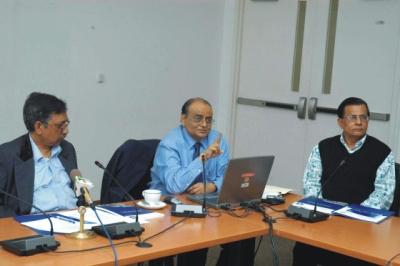
Improvements in transportation, storage and administrative infrastructure at land borders would yield substantial benefits for Bangladesh and India in case of a pact on free trade, suggested a World Bank (WB) report on India-Bangladesh Bilateral Trade and Potential FTA. It also stressed the need for a low protective tariff. The WB said trade liberalization by the two countries would bring greater economic benefits in cross-border transactions rather than trading under an FTA. The report further said the two countries could still reap enormous benefit from cooperation in other areas without necessary enforcement of a pact on free trade. Trade under FTA makes a discrimination in imports from rest of the world, for prices of importables (often excluded from import lists) from the FTA beneficiary countries are higher than those of the importables from the countries which are not signatories to any free trade pact, the WB report found. It further said if Bangladesh and India sign an FTA, it will yield no economic welfare for both the countries, nor any economic benefit for the rest of the world exporters who lose their markets. These trade diversion effects need to be allowed for in any comprehensive evaluation of the costs and benefits of FTA, the report suggested. Dr Zaidi Sattar, senior economist of World Bank, formally released the report to journalists through a presentation held at its office in Dhaka yesterday. Moazzem Hossain, editor of the Financial Express and Professor Abdul Bayes, former Vice Chancellor of Jahangirnagar University, were present at the media briefing session. The study completed with research contributions from both the sides, however, found that a FTA will bring large welfare gain for consumers in Bangladesh provided there is an adequate expansion of infrastructure and administrative capacity at customs borders. Yet the benefits of such an FTA to Bangladesh could be wiped out if it has the effect of keeping out cheaper third-country imports. Such trade diversification costs can be huge and the only way to minimise them is further unilateral labialisation, the report said. Citing an example, Zaidi Sattar said, a Tk10,000 priced China, a non-beneficiary of FTA, colour TV with 75 percent import duty is sold at Tk17,500 in Bangladesh marker, while a Tk12000 priced Indian TV with same duty is sold at Tk 21000. But under an FTA, by getting tariff concession, the prices of Indian TV would come down to Tk15000. "As a result, customers will have to shift their preference on buying high cost Indian TV, and they have to pay more," he said. "Trade liberalisation under a unilateral approach, more benefits can be enjoyed in India and Bangladesh rather than trading under an FTA," he said. "But in that case, both the countries should cut down their tariffs and should come forward to minimise some issues like non-tariff barriers, unofficial trade and customs hassles," he said. According to the study, a bilateral FTA would provide substantial benefits to Bangladesh consumers by giving them access to cheaper exports from India. These consumer benefits would far outweigh losses in government revenue or lost profits for the local manufacturers. The study, however, said such benefits could easily be wiped out, if one does not make sure that the incentives give the right signals. By keeping out cheaper third-country imports, the FTA risks providing a captive, protected market where Indian producers might collude amongst themselves or with Bangladeshi importers to artificially increased prices. On the other hand, cheaper goods from other countries might be excluded forcing Bangladeshi consumers and businesses to overpay, it said. For India, since trade with Bangladesh is small relative to its total trade, welfare gains from an FTA would be modest, though it could trigger cross-border investment opportunities, the study said. Nevertheless, the study found a weak case for pursuing a bilateral FTA based on the potential economic benefits to the two countries. Thus, in order to get mileage out of an FTA, the two countries have been advised to continue with unilateral liberalisation while streamlining border transactions through trade facilitation.
|