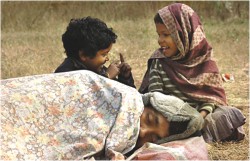
Coldest winter in years
Weathermen forecast more cold wave to hit city late January
Raihan Sabuktagin
Last week was the coldest for dwellers of Dhaka in recent years as spells of cold wave enveloped the whole country. The children, the elderly and the working class of the city suffered the most during this time.The department of meteorology predicts more cold wave to hit this metropolitan later this month -- between January 20 and January 25. The cold wave this year arrived early in the month of January and continued till January 10, said the meteorology department. The coldest days were experienced between January 4 and January 7. "If the temperature dips bellow 10 degrees Celsius and stays below 10 for at least 24 hours, we call the situation a cold wave. This definition of cold wave is only applicable for Bangladesh," said Abdul Mannan, a weather forecaster officer at the met office. On January 3, the maximum temperature of Dhaka was 23 degrees Celsius and the minimum temperature was 11 degrees. On January 4, the maximum temperature dropped to 18 degrees while the minimum temperature also fell and stayed near but below 10 degrees. "When the difference of maximum and minimum temperature reduces, the sensation of cold is intensified for all living beings, Mannan explained. The difference of minimum and maximum temperatures increased on January 5, improving the situation a little bit, as the minimum temperature decreased and maximum temperature increased. Maintaining the same gap, both minimum and maximum temperatures further increased on January 6. But on January 7, the maximum temperature suddenly took a nosedive and hit bellow 19 degrees Celsius. The difference between the minimum and maximum temperatures on that day was only 7 degrees Celsius. The last time the difference of minimum and maximum temperatures reduced so sharply was in 1997 when the difference was also near 7 degrees Celsius. Mannan added, saying, "When such incident occurs, people feel more cold." According to Mannan, the new spell of cold wave might hit Dhaka between January 20 and January 25. Sardar Faruque, a physician, said children and the elderly are most likely to suffer from diarrhoea and pneumonia if they are exposed to low temperatures for a long duration of time. Productivity at work would also be decreased under such conditions as extreme cold might cause cardiovascular and respiratory problems, he added. During the cold wave, the less privileged working class -- construction workers, domestic helps or the CNG auto rickshaw divers -- suffered immensely. These groups of people had no other option but to be exposed to the bone-chilling cold as their work involves handling metals, water or driving in an open vehicle in the unbearable cold weather. Aminur Rahman, a worker at an aluminium window installer at Mirpur, said, "The metal (aluminium frames) was too cold to touch and my group could do little work on those cold days." He said other construction workers also had a very difficult time during the cold spell as they had to handle iron rods and water. A CNG auto rickshaw driver, Helal, said, "It is really difficult to drive in such conditions." Besides, "my income also reduced as fewer number of passengers hired CNG auto rickshaws during the cold wave." Ashiqur Rahman, owner of four CNG auto rickshaws said the cold wave affected him financially as well. He had to collect less money in daily deposits from drivers because all his drivers made less money since they could not bear to drive in the cold for a whole day.
|