Endeavour
Promoting hand hygiene
Star Health Report
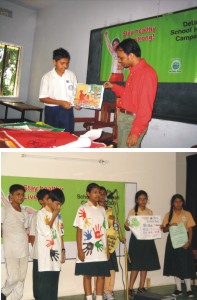
"Wash your hands" - is a simple message but washing our hands can easily is something that we do not always do perhaps because our hands do not look dirty, we do not have time, or we do not believe it makes any difference.But it really does make a difference. The most common way germs spread by people's hands and they can carry a range of bugs including food poisoning and diarrhoea, flu viruses and more serious germs like MRSA, E. coli, hospital acquired infections and so on. Appropriate hand washing can minimise micro-organisms acquired on the hands by contact with body fluids and contaminated surfaces. Hand washing breaks the chain of infection transmission and reduces person-to-person transmission. Hand washing is the simplest and most cost-effective way of preventing the transmission of infection and thus reducing the incidence of infection. According to CDC (Centers for Disease Control and Prevention, Atlanta, USA), the single most important thing we can do to keep from getting sick and spreading illness to others is to clean our hands. Most of us know that hand washing is important but do not practice properly in their daily life whereas some others are completely unaware about it. This is due to the lack of effective initiative to raise awareness regarding hand hygiene. Now a day, leaders of World Health Organisation (WHO) are thinking it seriously and is going to implement a strategy. Hand hygiene is one of the five elements of the Global Patient Safety Challenge now adopted by WHO. Considering the importance of awareness of hand hygiene, SAFE (Safety Assistance for Emergency), a social welfare trust organised a pilot programme to create awareness among the school children of Dhaka city. Dettol expanded their hand by sponsoring the programme as a part of their corporate social responsibility. They had taken action on 30 schools in the capital to raise awareness regarding hand washing by organising workshop to know the significance of hand hygiene and how to wash hand properly. They also organised competition among the school children. The school children participated actively in the programmes. They showed different aspects regarding problems and way out about hand hygiene. It was a little endeavor according to the need of the country. The most vulnerable section which needs this campaign and project is rural people. "We have a plan to expand the programme in the whole country to make the children of the whole country aware of hand wash", said Moshiur R Khondokar, Executive Director of SAFE. School going children were selected for this programme because - they are grouped together and exposed to many new germs; they have immune systems that are not fully developed to fight germs; they do not have complete control of body fluids that contain germs; they have personal habits that spread germs like thumb sucking, rubbing eyes, putting things in their mouths. Moreover, they bridge different levels of our society like their friends, families and teachers. The organisers hope the campaign will be a model to promote issues of hand hygiene.
|