Movie Watch
'Traffic Signal': A world often overlooked
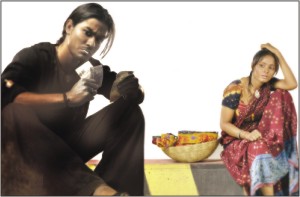
Chandni Bar peeped into the lives of bar dancers. Page 3 exposed the glitzy lives of the glitterati and chatterati. Corporate was about wars fought inside the boardrooms.Madhur Bhandarkar's new outing Traffic Signal (final episode of the trilogy that started with Page 3) introduces the audience to a world that is hardly ever noticed. A world one sees every single day at the traffic signals, but forget all about it the moment the light turns green. The movie is more of a collage of moments than a cohesive script. A flourishing 'industry' exists at the intersections of Mumbai and those who engineer and run the 'empire' include gangsters and politicians. This is no glossy, feel-good, escapist cinema that has actors dressed in designer outfits and breaking into songs in the Swiss Alps. The ragtag characters look like they have not bathed in weeks and the lingo they speak is outright pedestrian, coarse and uncouth. Silsila (Kunal Khemu), a young orphan, who took his first tiny steps at the 'Signal', is now its manager. He loves all those working at the signal, which in a way is his family, but would spare none when it comes to business. Silsila's mentor Jaffar (D Santosh) is the collector of his region. Both Jaffar and Silsila work for the local Mafioso, Haji (Sudhir Mishra). Inherent in the social structure lies a nexus between the local mafia and politicians, though at that level Silsila is almost non-existent. Yet, by a force of circumstance, Silsila gets drawn into the bigger game and finds himself responsible for the annihilation of his own world. What would Silsila do in such a situation? Like Bhandarkar's previous films, Traffic Signal too is about assorted characters. There's a kid called Tsunami, who has lost his parents in the Tsunami. There's a girl (Neetu Chandra) from Gujarat who sells traditional outfits. There's a hooker (Konkana Sen Sharma) who has a soft corner for a drug addict. The junkie, in turn, has his own story to tell. The film does not peep into every character's lives. All it does is introduce the characters that breathe the same air on the mean streets. Bhandarkar's choice of subject is laudable, although one wishes that there were ample dramatic moments in the narrative. The subject material will have its share of admirers and adversaries. Compiled by Cultural Correspondent
|