Book Review
Stylish and light
Isobel Shirlaw
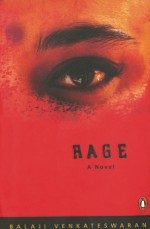
Rage by Balaji Venkateswaran; New Delhi: Penguin Books; 2005; pp.408.Set against the violently discordant soundtrack of twentieth- century India, Balaji Venkateswaran, in his novel, Rage, weaves together the stories of three generations of women from one fractured family in what is now recognised as the southern state of Tamil Nadu. In the turbulent years leading up to Independence, we are submerged in the dangerously murky waters of the underground City - a secret society of freedom fighters, activists, artists and rogues - 'the furtive, invigorating City that the British had only heard of, but could never visit'. Within the hushed walls of the City, Rangachari, a subversive film writer, is sent to jail, thus introducing one of Venkateswaran's signature motifs - that of the relationship between art and politics. As the years unfold, Rangachari's daughter, Devaki, becomes infatuated with his great friend and political ally, Nasser Sharif, a legendary Moplah Muslim movie star. But when childhood infatuation turns to adult lust the two are ostracised from their families and community, and their baby, Lakshmi, is brought up by Rangachari's wife. The figure of Lakshmi stands at the heart of Venkateswaran's novel, as a symbol of womankind and of the new India, borne of Muslim and Hindu parents into a world where the old rules no longer apply. Filled with an inexplicable rage at her mother, at the nomadic Kurava people, and at the rest of the world, Lakshmi turns away from her life in the theatre in favour of a different public stage, as her political conscience evolves. The story is narrated by Lakshmi's childhood friend, Vasu, in the distant and mournful voice of a man whose love, like a flower out of sunlight, has unexpectedly blossomed in her absence. Vasu traces her movements through magazine stories, through the anecdotes of the disinterested journalists at the newspaper on which he works and through the growing beauty of her daughter, Ragini. Venkateswara's writing is lyrically elliptical and his presentation of the outsider in addition to his perception of female thought and dialogue is unusually sensitive. He conjures up the almost narcotic lure of fame and adoration and paints a convincing picture of the way in which political ideals all too often collapse under the unbearable temptations of wealth and power. Rage is Venkateswara's first novel and his prose is stylish and light, rarely allowing clumsy political analogy to cloud the effects of his artistry. It is exciting to imagine what other tricks he might have up his sleeve. Isobel Shirlaw lives in Dhaka and is a free-lance editor and reviewer.
|
|

