Our Talent
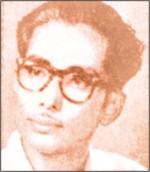
Sheikh Luthfur Rahman: An illustrious composer
A man of indomitable spirit, Sheikh Luthfur Rahman was an illustrious composer, teacher, socio-cultural activist and eminent singer of our country. His immense contribution in composing geet, ghazals and much later timeless patriotic songs-- the Gono Sangeet, has been a source of great inspiration in the cultural movement of our country. Born in1920, in Chhoto Bakal village of Sathkhira district, Luthfur Rahman was the son of Sheikh Abdul Huque, a schoolteacher who was proficient in music as well. At the age of nine, Rahman developed a walking disability, the result of acute typhoid. While studying at a convent and later at a local madrassa, his enthusiasm for music led him to abandon studies. From then on he trained under his father in Nazrul and Tagore songs. Umapodo Bhattacharjyo, the principal of the local high school, was his second tutor in pure classical songs. However, the turning point in his life came, when the zamindar of Tarani, Pashupati Chattyopadhyay, a patron of music, expressed his appreciation of Rahman's musical skills. Subsequently he received his patronage in pure classical and semi-classical songs such as tappa, Ramprasadi and Shyama Sangeet that continued for five years. His yearning to learn more led him to venture into newer grounds and soon he landed up in Kolkata in 1942. Here he received training in pure classical songs under Onathnath Basu and Biddyut Biswas. It was around this time that he joined the Song Publicity Department and was eventually enlisted at the Kolkata Radio Station. After Partition in 1947, he settled in the then East Pakistan and joined the radio station as an enlisted artiste. From 1956 to 1964, he resided in erstwhile West Pakistan where he became a teacher at the Nazrul Academy in Karachi. During his stay, he also trained under Habib Ali Khan Binkaar. After his return to Dhaka, he conducted a students' programme in music from the radio station that soon propelled him to prominence. In his illustrious career, he served as the principal of Nazrul Academy, professor of the Department of Nazrul songs at the Music College and a regular teacher at Chhayanaut Sangeet Biddyatan as well. A meticulous teacher, his wholehearted appeal in the rendering of classical-based Nazrul songs and music compositions earned him widespread renown in the vast field of music. By the mid-'60s, Rahman shifted from semi-classical to composing his timeless Gono Sangeet pieces. Orey Bhai, Bangladesher Bangali ar nai, Shunen Hujur bagher jaat eyi Bangalira, Manbona bondhon manbona, Lanchhito nipirito jonotar joi, Biplober o rokhtey ranga jhanda orey akashey, Himaloy thekey Shundor bon hothath Bangladesh (written by Shukanto Bhattacharjeo), Phul khelbaar deen noi oddo (written by Shubas Mukhopadhyay), Jonotar sangram cholbeiy (written by Sikendar Abu Zafar), Orey bishom doirar dheu and several others inculcated a spirit of confidence, vigour and inspiration to the freedom-loving Bengalis. A recipient of the Ekushey Padak, Rahman wrote his autobiography Jiboner Gaan Gai and is remembered with reverence by his innumerable students and admirers. With Ekushey February on the horizon, it is time once more to remember stalwarts like Rahman who have contributed immensely to an enrichment of the country's cultural heritage. Source: Bangla Academy Charitabhidhan.
|