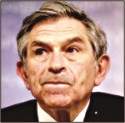
Wolfowitz bows to pressure, steps down June 30
Afp, Washington
World Bank president Paul Wolfowitz bowed to weeks of pressure and agreed to step down June 30 to end a favoritism scandal that had rocked the poverty-fighting institution. Wolfowitz, 63, said on Thursday he was resigning in the "best interests" of the bank, thus ending a protracted controversy over a generous pay and promotions package for his girlfriend, Shaha Riza. "I have concluded that it is in the best interests of those whom this institution serves for that mission to be carried forward under new leadership," Wolfowitz said in a statement after three days of deliberations by the World Bank board. Wolfowitz violated bank rules in arranging a generous promotion and pay package for Riza shortly after he assumed the bank presidency in June 2005, according to an internal World Bank report made public Monday. Riza ended up earning almost 200,000 dollars a year when she was transferred to the State Department while still on the Bank's payroll. The report also said the bank gave Wolfowitz vague instructions on how to resolve the possible conflict of interest over Riza. Wolfowitz said in his statement that he "acted ethically and in good faith" in what he believed "were the best interests of the institution, including protecting the rights of a valued staff member." The bank's 24 executive directors also issued a statement that seemed tailored to meet Wolfowitz's reported demand that the bank recognize their flawed advice in the Riza affair. The announcements drew a delicate face-saving balance, acknowledging that wrongs were done on both sides but that all parties had acted in good faith. "A number of mistakes were made by a number of individuals in handling the matter under consideration," the statement said. The directors pointed to successes under Wolfowitz's two-year tenure, such as debt relief, clean energy investment and avian flu projects. "It is regrettable that these achievements have been overshadowed by recent events," they said. The bank's country director for China and Mongolia, David Dollar, described the process as "difficult" but said it showed the institution was "serious when we talk about governance." However, the World Bank Group Staff Association which represents around 13,000 employees took a dimmer view, saying in a statement that Wolfowitz had "demeaned the Bank, insulted the staff, diminished its clients, and dragged this institution through the mud." The resignation deal leaves Wolfowitz in office until June 30, but with greatly reduced powers, according to a source close to the negotiations. Wolfowitz agreed to not make any major decisions on policy or personnel matters and will not attend the Group of Eight finance ministers meeting this weekend in Potsdam, Germany, the source said. European countries had led the drive for his departure from the bank for more than a month. The White House said it regretted the decision of the former US deputy defence secretary -- a key architect of the Iraq war -- but that President George W. Bush would soon announce a new candidate. "We would have preferred that he stay at the bank, but the president reluctantly accepts his decision," the White House said in a statement. "The president will have a candidate to announce soon, allowing for an orderly transition that will have the World Bank refocused on its mission." By tradition, the United States nominates the World Bank chief -- typically a US national -- while Europe names the head of its sister institution, the International Monetary Fund. World Bank senior vice president Francois Bourguignon said the crisis had been resolved and it was time to move forward. "We need a president and this is urgent," he told reporters in Slovenia. The list of Wolfowitz's possible successors grew as the scandal deepened. In addition to former US trade representative Robert Zoellick, names often cited were Treasury deputy secretary Robert Kimmitt and former Federal Reserve chairman Paul Volcker. US newspaper editorials faulted Wolfowitz's leadership style for his demise, and urged his eventual successor to continue to tackle corruption. The Washington Post said he "marched into the corruption battle without planning for the postwar," while the Los Angeles Times evoked his "ineptness on display."
|