Leaving on a high
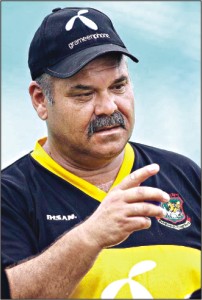
When Dav Whatmore leaves Dhaka on Friday it will mark the end of his almost four-year assignment as Bangladesh coach. The peaceful departure of the Sri Lankan-born-Australian is unique in many ways. He is not only leaving with an enviable tag as the 'most successful coach' of a team whose very existence at the top level was in serious question when he took over in June 2003, he is also the first among the six foreign coaches who parts with dignity and pride after the sorry and painful departures of Indian Mohinder Amarnath, West Indies great Gordon Greenidge, South African Eddie Barlow, Australian Trevor Chappell and Pakistani Mohsin Kamal. The favourite phrase of the 53-year-old along the troubled and long journey was 'improvement of performance graph'. And true to his words, he is leaving Bangladesh on strong footing from where they can only go up. The biggest strength of a man with a conspicuous moustache was his ability to protect his boys when the chips were really down. He is perhaps the only coach of international repute who never raised his finger against a particular player publicly for his failure. Not quite animated when it comes to encountering the press, Dav was chirpy enough to give The Daily Star Sport's Bishwajit Roy a full-length interview at his Gulshan residence Tuesday afternoon. Following are the parting shots of a man who is leaving behind a high standard for his successors to follow:Daily Star Sport (DSS): When you took over the mantle of coaching in Bangladesh, you must have outlined a number of goals for yourself. How much of those goals do you think you have achieved? Dav Whatmore: There are macro and micro goals. Essentially it all boils down to the team winning. I was employed in 2003 to get this team firing up. I guess the main goal was winning. If you quantify the wins before I came and when I am leaving, it looks in my favour. The team is in better shape than in 2003. DSS: When you came here you said that you are looking forward to improvement by terms of wining. It has happened in ODIs but not in Tests. How do you see that? DW: I am not sure if I had said that it's measured in terms of wins or losses. I think it is pretty unfair to measure success in terms of wins and losses in the case of the Bangladesh team. As I have said, the one-day game has gone on to a pretty good state of affairs. There have been some encouraging performances in the longer-version from time to time. We have once, went close against good sides but that's not enough. DSS: When you started we saw a lot of enthusiasm in you but many think you gradually started just to go with the motion, especially in the middle of your tenure. Why was that? DW: It's a matter of opinion (laughs). We don't have to agree with your opinion. I haven't lost any drive in my four years. I have always looked forward to competition. The team have had fluctuations at times when they were not performing. To say that I have slackened off would be incorrect. DSS: Were you frustrated when frequently lost game after game? DW: There are plenty of games we lost. If I wasn't frustrated or angry, then I wouldn't be doing my job. DSS: Your concentration level looked distracted ever since you have been connected with the India job. Do you agree? DW: No, that's absolute rubbish. DSS: What in your opinion is the biggest factor hampering the development of Bangladesh cricket? DW: The question should be that what could be done to progress cricket in Bangladesh. That's the way I would prefer to look at it, as I would like to look in a positive mode than anything else. Quicker, we can make the domestic cricket, with that I mean four-day cricket, more lucrative and stronger. DSS: You have worked with two generations of players -- Mahmuds, Rafiques and Bashars -- and then moved on to the young brigade of Ashraful, Aftab, (Shahriar) Nafees, Shakib, Tamim. How do you think these two generations differ? DW: The younger ones have a sense of no fear. It is a good attitude to have. They certainly bring in a bit more athleticism because they are younger and more agile. The main difference is that they don't have the history of, unfortunately, Bangladesh playing and losing. They are playing more or less what they see as in they don't go out there just to bat and not get out. They see a ball and they hit it. The younger guys are out there to get runs. DSS: You have worked under Sri Lankan and Bangladesh boards. How different are they in handling a coach or other things? DW: Cricket boards are there to administer the game. They are both employers and they go on well with foreign coaches. I have no complaints. They are quite similar. They do their best to administer the game in the domestic scene and they give me support. DSS: You also worked as a selector during your time here. How much opinion did you have in picking a side that suited you? DW: Oh you're asking how many wins did I have (in the selection)? (laughs). I am part of a group of people who have a big responsibility to pick squads and teams for Bangladesh cricket. There's an opportunity to voice your opinion, sometimes very strongly and be heard. It is difficult to make specific comments other than to say that we have had the same selection committee for four years. It's good to have some continuity in that regard. But along the way I have had some losses. But whatever it is, it was a committee decision. DSS: You are no longer associated with the Tigers. What would your team selection be for the forthcoming Sri Lanka tour? DW: Look we have done okay in the ODI team. I am not sure there will be too many changes. But this is the start of a new four-year cycle and it really depends on what the selectors want to achieve. Building a game for another World Cup, which will take place in the sub-continent. Changes will have to be done very carefully. It may be the time to get some new players in. DSS: What would you rate as your greatest success during your four year tenure? DW: There have been some really good games that we played in. The recent World Cup performance is definitely up there. It allowed the team to get into the Super Eight competition. DSS: From a very neutral standpoint, what do you think of Habibul Bashar's decision to quit as one-day captain and about his future in the shorter-version? DW: He said he had a bit of pressure. His lack of runs may be why all these comes about. Very unfortunate that he didn't enjoy the best of the World Cup. Even in the last 12 months, he has been useful at number five. People don't look at certain areas like team bus, dressing room, etc where he adds bit more calmness. He was under tremendous pressure in his own mind. But I respect whatever he has done. DSS: Do you think Bangladesh can afford to have the luxury of separate captains? DW: Not ideal. You would like to have one captain. But it depends on the situation where the team is. It's not my decision though. He (Ashraful) has had some experience with Sonargaon and Dhaka. He is the next in terms of experience. I think he should be given a chance to do what he likes. DSS: Our cricketers have always been praised for the sheer amount of talent they have, yet their averages are really poor. Do you think that our cricketers are not consistent due to technical failures or some psychological issues? DW: I am not sure if it is technical. Some should have appreciatively higher averages than what they have and given the talent that they have. It comes back down to the standard of domestic cricket which is not really high. You pick habits from that standard. It is the inner belief that you can get over from this. DSS: If you could look back and change one thing in your tenure as a coach, what would it be? DW: Probably give up smoking earlier (Laughs all around). DSS: What are the strong and weak points of Bangladesh cricket? DW: Their strength is that they keep coming up after being knocked down. They always look for the next game. As we evolve slowly, we will see consistent improvement in the shorter version of the game. It gets harder in the longer version where the opposition have more time to impose themselves on the cricketers. Improvement in the Tests will take more time. DSS: What are your biggest regrets? DW: Nothing. DSS: We have seen some talented cricketers fade away from the spotlight during your tenure like Alok Kapali, Al Shahriar, Tushar Imran. It's true that they have failed sometime but don't you think that you have not motivated them enough to comeback. It seemed that you just let them go. DW: (laughs) I am not happy with anybody who has talent and doesn't make it. But I do take some responsibility. But you're being harsh as you're saying that it's my fault. I never take credit when players do well. Therefore if a player doesn't do well, I don't think its fair to say that the coach is at fault. I take responsibility but at the end of the day, the player should take some of the responsibilities. Alok is still rated highly and potentially extremely good. If you see him bat in the nets, you'd pick him first but unfortunately that didn't translate into runs. Even though he has so much ability, he must understand what batting is all about. DSS: Do you think not finding a permanent opening combination is a big failure? DW: Yeah, it is the same now. We have another boy (Shahriar Nafees) out of form as well. Opening hasn't been the best part of our batting line-up. It would have been nice to have a good opening pair as it is important to have a good start if you're batting first or second. DSS: Tell about one single fond memory or interesting event? DW: Lots of fond memories. Relationship that I have developed with the players. Interesting conversations you have, interesting things you learn from players. Going to places with them like Jessore, Khulna and Bogra and just to know of their lives. Interacting with the players for four years, I've enjoyed their company. They are all very good boys. DSS: Say about one event or incident that disappointed you most? DW: Yeah, hurtful things have happened and it is recorded in my mind. Those will remain private with me, I can't share those. DSS: Would you identify one single player in your team whom other can follow as an example? DW: I am not the type who individualise but if I had to name one, a guy who can put Bangladesh on the map would be the boy from Narail: Mashrafe Bin Mortuza. He is potentially very, very good. DSS: If we set a target to do well in 2011 World Cup, do you think we should take some harsh decisions about the seniors? DW: Not just the senior players but take harsh decisions when they come along. It's a slow process of moulding a good team. DSS: Do you think lack of pace bowlers in the pipeline is a big headache, especially in Test cricket? DW: Possibly yes. Physique in Bangladesh doesn't allow us to have big, tall, strong individuals who bowl fast. We would love to have more of the likes of Shahadat (Hossain) and Mashrafe. Yah, we would like to have more bowlers who hit the wicket and I think we have a few being developed in the academy.
|