Budget unique for three reasons
Finance adviser claims saying it is neither ambitious nor traditional
Staff Correspondent
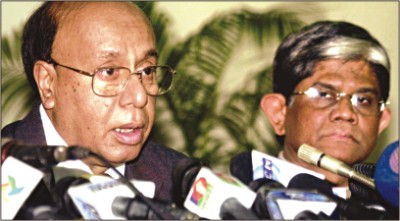
Finance Adviser AB Mirza Azizul Islam has termed the budget proposed for the coming fiscal year unconventional and realistic and said it's not that ambitious.He said it is unique in that for the first time it includes contingent liabilities, proposes to curtail discretionary powers of the tax officials and seeks feedback from individuals and organisations regarding project implementation. Addressing a post-budget press conference in the capital yesterday, the finance adviser said although necessary steps have been taken, prices of essentials will not mark a significant fall soon due to international market pressure. However, measures have been taken to safeguard the poor. If the government can retrieve the ill-gotten money believed to be stashed away at home and abroad, a portion might be used to reduce deficit financing or enlarge the Annual Development Programme (ADP), he said. Explaining "three reasons that have made the budget unique", he said efforts have been put to make the budget transparent and accountable. "For the first time, contingent liabilities have been set in the budget," he added. The government will take feedback from the people and organisations on how to develop the projects and ensure quality of the implementation process. The ministry concerned and the Implementation Monitoring and Evaluation Division (IMED) of the planning ministry will receive the public input online. A secretary-level committee will put forward a set of proposals identifying obstacles to project implementation and potential ways to get rid of those, and the government will take decisions in the light of those proposals. The Tk 87,137-crore budget unveiled Thursday proposes limiting the taxmen's powers and introducing a universal self-assessment system for the taxpayers. "I myself at a discussion last year termed the budget of my predecessor ambitious, and so I was careful so that this year's does not become an ambitious one," the finance adviser said. He also said usually the budget is prepared taking into account the expenditure, not the funds to be made available, but this year's has an eye on the funds first and then fixed the expenditure. The target of revenue collection has been increased by only 0.2 percentage point of the GDP (Gross Domestic Product) and in no way can it be termed ambitious, he maintained. The estimated foreign aid in the budget is also very realistic as the figure has been set on the basis of the assurance made by the donors. Besides, a substantial amount of foreign aid is already in the pipeline and steps are there to have the funds disbursed quickly, he said. The bank borrowing to meet the deficit is 1.6 percent of the GDP, which too is not that high, he notes. The adviser said the money the government will borrow from banks will be spent on development projects that will result in a positive impact on supply side, and ultimately contain the inflation. Asked, he said the ill-gained money to be recovered will be deposited in the government's consolidated fund. He however could not give an estimate of how much money of this kind will come over the next fiscal. Mirza Aziz dismissed as baseless the worries that the increase of duty on industrial raw materials from 5 percent to 10 percent may adversely affect the local industry. An official of the NBR (National Board of Revenue) at the press conference said the customs duties on raw materials for leather, pharmaceuticals and textiles will remain unchanged, and a separate statutory regulatory order will be issued on July 1 to that effect. Cabinet Secretary Ali Imam Majumder, Bangladesh Bank Governor Salehuddin Ahmed, secretaries and high-profile government officials, among others, were present at the press meet.
|