The South Asian music archives
Dr. Karunamaya Goswami
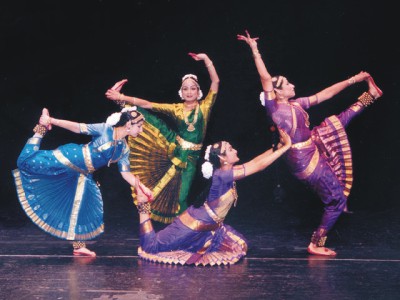
The Saarc summit 2007 at Delhi appears to have concluded on an enthusiastic note. From the deliberations we have every reason to believe that some concrete actions will follow the Delhi Summit. This year the Saarc area has been enlarged with joining of Afghanistan. China, Japan, South Korea, the EU and US have attended the summit as observers for the first time. Iran is also interested in playing a role as a Saarc observer. It is clear that regionally and internationally Saarc has gained a ground stronger than ever before. Success of some regional forums around the world must have encouraged the South Asian leaders to move fast from declaration to action. We get this point when the Indian prime minister (current head of the club) says: "The time has come to move Saarc from a declatory phase to action and implementation." The Indian External Affairs Minister termed all what took place around the Delhi Summit as "an indication of high level of maturity." True, if Saarc has got to work well to improve the living condition of 1.47 billion people who live in the area, there is no alternative to behaving with maturity. The Saarc countries must prepare and move along a reasonably designed road map of living together in peace and working hand in hand to build a better future for a huge number of the South Asian people who are languishing under poverty. Unfortunately the Saarc achievement record so far is not bright and small issues have always jeopardised materialisation of bigger and better ideas. But this year the leaders taking part in the summit appear to have shown a firm commitment to make Saarc forum really proactive and supportive of a common concept of the South Asian development. Items like Safta, Food Bank, terrorism and connectivity have been paid serious attention. The South Asian identity factor also demanded a slice of attention. This will also go under the connectivity head. As for bolstering connectivity, it was decided that all the Saarc country capitals would be brought under an umbrella of direct flight links and a liberal visa regime would be worked out for journalists, academics and students. There has been an amazing decision on establishing a South Asian University, may be under the connectivity theme. A common higher education module for the entire South Asia is a brilliant idea. But we know nothing more than the fact that the university will be founded in India. But if the university education module has to serve as a source of connectivity in the South Asian region, it should be a multi-campus institution. The principal campus may be in India, in Delhi perhaps, but there must be campuses in the member countries to make it a university chain. The university will be a modern centre of excellence in the right global sense but there must be something South Asian about it, which can only be ascertained by offering the students a well-designed course on the South Asian Culture. Now the identity factor: If anything like the South Asian identity has got to be ensured then we must take care of the South Asian culture. It is exact in the culture where we stand different from many others. But the cultural scenario is fast changing under the impact of industrialisation, urbanisation and most importantly, westernisation. With its advanced education and technology supported by huge wealth the West is moving steadily to overtake the rest of the world and shape and reshape anything and everything in its own format. Globalisation is synonymous to Westernisation today. In this context if the South Asian forum decides to stick to the region's identity or create a South Asian identity model, only culture as a whole can help. Essentially the question of tradition will come up. Tradition is our culture and culture is our tradition. We should not lose our culture at the onslaught of westernisation. Taking for granted that global-ism will work and global-ism means western-ism, the South Asian region must take the cultural question seriously. Otherwise the western wind will blow off everything that belongs to this region for hundreds of years. A race of fugitives will begin living in its own land. Now what can one do? As a developing region, South Asia requires all that is given by the west for its multi-sectoral development. We cannot do without it. That same cultural space must be allowed for our children to grow as they are. For this perhaps South Asia must immediately pay serious attention to save and revitalise the important components of mainstream culture. We understand that because of inadequate preservation plans many of our cultural conformists have been lost. But many have yet remained. We can make our identity glorious only by revitalising our culture. If we take part-by-part programme our first priority would be to save and revitalise our music inclusive of dance. Some other such programmes involving other cultural areas may follow. They may even be undertaken simultaneously. But for identity's sake music and dance should be saved and revitalised. South Asia is rich for its music and dance. The organised and grammatised music and dance tradition of the region is even the oldest in respect of what happened about these art forms anywhere in the world. The earliest authentic treatise on dance, drama and partially music entitled as Natyashastra was written by Muni Bharat between 400 B.C. and 200 A.D. Natyashastra was written at the perfected stage of Bharatnatyam, the earliest Indian classical dance genre. And it certainly took several hundred years for this form to gradually develop into perfection to allow space for defining major and minor formations of body movement including hand gestures or Mudras. Bharat defined and described acting: Abhinaya and sentiment: Rasa. This amazing treatise stands as a witness of time to ascertain the age of classicism in South Asian art. The vocal music in recitational form under a Tristhan, three space formula, began at the Vedic age. This three-space genre gradually flourished into a Saptarswara, seven-tone mode, in some pre-Christian era. The age of Prabandha Sangeet Well-defined classical music forms began to be composed and performed at an early Christian era which gave South Asian music an edge in respect of musicology and performance style against all what happened in music anywhere. Musicology as a subject grew fast. Books on dance and theatre were being written in an amazing scale. Compositions were largely divided into Marga: classical and Deshi: folk. Folk music flourished in countlessly regional forms throughout South Asia and classical music flourished in diverse Prabandha forms. Sangeetratnakara, a 12th century treatise on music, gives detailed accounts of classical music as it diversely developed into Prabandha Sangeet structures. The Muslim conquest of India created an environment of interaction between the Prabandha Sangeet mode of India and the musical works of Turkey, Persia, Afghanistan and even those of Arabian regions. This interaction gave a new creative direction to the classical as well as the folk music of the sub-continent. This new creative direction got an amazing support in the works of Amir Khasru in the beginning of the 14th century. This interactive music is known as Hindustani classical music which pervaded the whole of South Asia excepting a small music pocket in southern India which followed its own classical mode known as Carnatic based on 72 parent scales. The older Prabandha Sangeet styles were shaped and reshaped in the Amir Khasru way and Hindustani classical music stood as the symbol of syncretism which is also the essence of South Asian culture. The old music order changed and forms like Dhrupad, Kheyal, Tappa, Thumri, Kawali, Shazal etc evolved gradually to shape up multiple facets of musical classicism. Initially there was the domination of vocal music. But soon instruments had their own place. Hindustani music, which flourished in varied dimensions with support from different gharanas had its vocal and instrumental versions simultaneously. Classical dance flourished in forms like Bharatnatyam, Kuchipudi, Kathakali, Manipuri, Kathak and Odisi. Folk song and dance took shape in numerous forms all along the South Asian music regions. Everything was going well and South Asia was recognised by the world as a magnificent music region unmatchable in many respects. When the Taylor and Francis Group, New York and London published the Garland Encyclopedia of world music in 2000, they allotted the whole one volume for the South Asia. It was the fifth volume. It becomes very clear how important is South Asia to the board of editors when they allot one volume to entire Europe and one volume to South Asia: the Indian subcontinent. The music of Afghanistan was also included in this volume. So South Asia is looked upon as a proud inheritor of a profound music and dance heritage. If the question of identity is raised, we may at once say that South Asia could be invariably identified with its music and dance. But as things are happening by, we don't know what is going to happen to our great heritage of music and dance. For the last four decades or so, pop music from the West has been silently and equally viciously occupying our music stage. For ages the South Asian music has thrived by absorbing all what it came by. That liberal space has always remained in it. But as for now this is no longer a question of absorption, this is a conquest question. It is taking over our stage. The young generation of the South Asian performers and listeners are throbbing with passion for the pop's loud music, strong simple beats supported by the awesome physical gestures. This trend is getting liberal patronage from multinational companies and local TV channels under a vanity of 'hunt' or 'search' programmes. Acrobatic feats are increasingly replacing our dance forms. It appears that we are fast losing all what we acquired over so many hundred years and making space for something un-south Asian-like to happen. This is where our cultural identity is at jeopardy. This is the consequence of cultural globalisation. Over the years we have said bye to some of our good art things. In some years or so our young men and women may say bye to our good old music and dance totally. It is time that we start taking care. Otherwise the western wind will sweep away anything and everything so specious from our hard-earned possession. As a part of the care taking programme we propose that the South Asian forum pay serious attention to preserving and revitalising our music heritage. First preserve and then revitalise. We propose that there should be a chain of South Asian music achieves. As we feel there should be a chain of south Asian universities. The task is onerous we understand. But it has to be braved. If we have to face the free sky music scenario provoking superficial entertainment, we must come up with our traditional wealth in a far bigger way for which there is no alternative to adopting preservation policy and programme. The South Asian Music Achieve chain may work with the South Asian University chain concept. Taking for granted that each campus will have a school of music and dance then the archives chain may be tagged with it. Or better archives plan be taken separately. When the Central South Asian University will be founded in India, the Central Music Archives may be founded in Bangladesh, may be in Dhaka. The central archives will be connected with the archives chain. There will be at least one archive in each Saarc member country. India will require having more than one archive in respect of its huge cultural space. Before the next summit takes place, a Saarc plan for preservation and revitalisation of culture with particular reference to music and dance at the initial stage may be devised. We don't know who will initiate the work. Saarc secretariat may initiate it. Or we may wait till the next summit for a formal resolution on the matter and allocation of fund. Or if some initiative from the government of Bangladesh through the Ministries of Information, Education and Culture is taken in respect of preparing a concept paper to be submitted for discussion in the next summit, it will move Dhaka one step forward to raise its claim to sit at the centre of the archives chain. We don't know what will happen. But we know for sure that the South Asian identity will run into a real risk if cultural heritage is not preserved and revitalised. One may even argue that when we are struggling to tackle some burning issues, the archives chain sounds like a far cry. The counter argument is, culture equals to decent living. It equals to living with distinction. All what we struggle for to tackle leads ultimately to this end. Dr. Karunamaya Goswami is an educationist.
|