Nature's revenge
Nazrul Islam
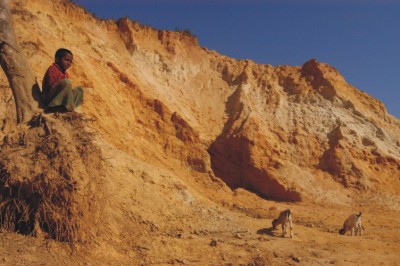
The devastation that wrought havoc in the port city of Chittagong is an eye-opener, which shows how vulnerable we are to natural calamities. Rainfall of 408 mm is not so high, at least in comparison with the Mumbai deluge of July 2005 when the Indian commercial city had experienced about 1200 mm rainfall in 24 hours. But the death toll in Mumbai was much less than that of Chittagong. According to the information available as of June 13, the death toll in the rain-triggered avalanche in Chittagong was 120, and damage to property was millions of Taka. Excessive rain was blamed for the widespread destruction, but can human beings shrug off their responsibility for the death of more than a hundred people? In fact, we human beings are solely responsible for the devastation. The mindless urbanisation, destroying the hills and vegetation in the port city, is the prime cause of the calamity that struck on Monday morning. Over the decades, hundreds of hills in the port city have been flattened to grab the land for construction of buildings. They were made barren by the cutting down of trees and vegetation, making them highly susceptible to erosion. The rainwater easily washed away the exposed soil, causing the fatal landslides. Had there been enough trees and vegetation on the hills/highlands, such soil-erosion would not have happened, and if it at all it did happen, the damage would definitely have been much less. Because, trees and vegetation protect soil from erosion and retain rainwater, slowing down the fast run-off. The green hills and their vegetation fell prey to the unpalatable greed of people. Even, the government, and local bodies like Chittagong City Corporation and Chittagong Development Authority, did not spare the hills. Those who were meant to protect the environment and vegetation, like the Ministry of Environment and Forests, did not play their role for protecting the hills. Many thought, or think, that nature would not notice this torture. But mother earth is so sensitive and revengeful that she does not forget anything that hits her, and she strikes back savagely when she thinks appropriate. What happened in Chittagong on Monday was nature's revenge. The hills were the treasure of the port city, making it the country's most scenic and beautiful city. Just a few decades back, the green vegetation and hills of the port city used to soothe the eyes of the city dwellers as well as the visitors. On the other hand, the Karnaphuly river, and the Bay of Bengal located adjacent to the city, makes it an environmentally highly sensitive place. Normally, the topography of the port city would not allow retention of rainwater for a long time if the drainage and sewerage system worked properly. But the inundation of most parts of the city in Monday's deluge proves that the system did not work at all. The reason for non-functioning of the system also lies in the hill cutting. The drainage system in the port city was almost clogged up with the soil coming down from the hills. The canals and rivers which once flowed through the city were also filled up and encroached upon by the city dwellers. Moreover, the Karnaphully River also lost its water retention capacity, as it had silted up over the years. Construction of several bridges over the river also slowed down its natural flow, augmenting the siltation process. On the other hand, there was no effort to remove the silt through dredging. Although floods, droughts, storms and other extreme weather events have always been a reality, they have been rare occurrences interrupting long periods of calm. The gentle rhythm of nature is breaking up because of human-induced climate change. People having faith in God generally see natural calamities like cyclones, earthquakes or floods as God's doing, and think there is no human hand behind them. But evidence shows that natural disasters have been gaining strength and occurring more frequently in recent years, causing many more human casualties and inflicting economic losses. Although some scientists are still skeptical about a direct connection between global warming, which is a result of human activities, with more severe natural disasters, but many are now convinced that there is a link. In a paper published in July 2005 in the journal "Nature," meteorologist Kerry Emanuel of the Massachusetts Institute of Technology concluded that the destructive power of hurricanes had increased 50 per cent over half a century, and that a rise in surface temperatures linked to global warming was at least partly responsible. Some scientists have maintained that the rise in mean global temperature over the last 50 years -- a well documented trend -- was widely linked to human activities such as burning of fossil fuels, and will inevitably have an effect on natural disasters. The Chittagong deluge again proves that the warning that a sizeable portion of Bangladesh will go under water by 2050, making over 30 million people environmental refugees, is not mere words. The 400 plus mm rains kept the city submerged for 48 hours, although the terrain of port city normally does not allow the water to stay for long. Natural calamity is common in Bangladesh. We used to live with flood, drought and other disasters. But the way these disasters have been gradually accumulating destructive strength, it will be difficult for the country's poor people to face them in future. Nazrul Islam is an environmentalist.
|