Greener living to thwart climate change
Abdus Sattar Molla
Our planet is surrounded by a blanket of gases which keeps its surface warm and able to sustain life. This atmospheric blanket is getting thicker and greenhouse gases trapping in heat as we release carbon dioxide, sulfur dioxide, methene etc. by burning fossil fuels for energy and cut down forests and replace them with agricultural land, roads, buildings, industries. As a result the climate is changing and the most immediate change is the rise of temperature. Climate change is the theme for World Environment Day-2007 observed on June 5. Scientific research indicates that, because of climate change, we may experience more frequent extreme weather events. A gradual increase in temperature also has major implications for ecosystems, animals and their habitats. Some changes to the climate are inevitable -- even if we stop emitting gases now, the gases we have already released will have an effect. However, we must do everything we can to avoid further changes and adapt to the new situation we find ourselves in. The term "climate" normally describes the average weather we get over a long period of time. When our climate changes, the weather we experience locally day to day can also change. Over the millions of years of the earth's existence, the climate has changed many times. However, when we use the term "climate change" now, it is to describe shifts in temperature over approximately the last 100 years and the next 100 years or so. Causes of climate change
There will always be some degree of uncertainty in understanding a system as complex as the world's climate. However, there is now strong evidence and almost unanimous agreement that significant global warming is occurring. Both natural and man-made causes have impacts on climate change. Some changes to the earth's climate are caused by the effects on each other of the sun, land, oceans and atmosphere. These often occur over very long periods of time and can be termed sustainable. But most of the recent warming can be attributed to human activities. Human activity has changed the concentration of greenhouse gases in the atmosphere in two important ways. First, we have cut down forests. Trees absorb carbon dioxide; so, with fewer trees, more carbon dioxide builds up in the atmosphere. Also, the agriculture that replaces part of the forests can often be a source of emissions. Second, by burning fossil fuels like coal, oil and gas for energy, we release greenhouse gases. Currently, burning fossil fuels emits about 6.5 billion tonnes of carbon dioxide into the atmosphere each year. Since the industrial revolution beginning in the 18th century, concentrations of greenhouse gases have increased by about 30 percent. Effects of climate change
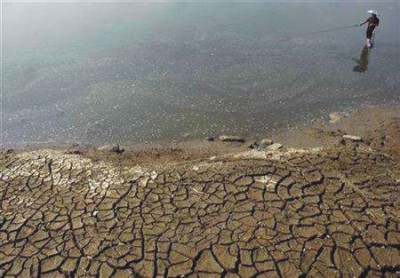
We have yet to experience the impact of the greenhouse gas emissions from the last 30-40 years. Scientists have identified some of the likely effects of this warming. Some regions will experience more extreme rainfall while others will experience drought. The sea level could rise by more than 40 centimeters by the end of the century. There are two reasons for this. First, as the water in the oceans warms, it expands. Second, ice from the polar caps and from glaciers is melting into the sea. Rising sea levels will completely swamp some small, low-lying island states and put millions of people in low-lying areas at risk. About one-third of lower-riparian Bangladesh may be submerged under sea water with devastating effects. There will be less water available for irrigation and drinking because there will be less rain, and salt from rising sea levels will contaminate ground water in coastal areas. Droughts are likely to be more frequent. Three billion more people could suffer increased water shortages by 2080. Northern Africa, the Middle East and the Indian subcontinent will be the worst affected. As temperature increases and rainfall patterns change, cereal crop yields are expected to drop significantly in Africa, the Middle East and India. As temperatures increase, the areas that harbour diseases such as malaria, West Nile disease, dengue fever and river blindness will shift. It is predicted that 290 million additional people could be exposed to malaria by the 2080s, with China and Central Asia seeing the biggest increase in risk. Higher temperatures and reduced rainfall could mean the loss of large areas of Brazilian and southern African rainforest -- on top of the forest that we are cutting down to clear land for agriculture and other uses. These forests currently act as a "sink" by absorbing large amounts of carbon dioxide which would otherwise be released into the atmosphere. What can we do?
We can't stop the effects of the greenhouse gas emissions that have already taken place. But we can influence the future. The majority of scientists agree that to avoid radical changes of temperature in the future, action is needed now. Many believe that emissions of greenhouse gases, which are continuing to rise, must begin to decline over the next 10-20 years to avoid extreme changes to our climate. Carbon dioxide is the main greenhouse gas that causes climate change. Every tonne emitted into the atmosphere commits the world to more warming. But every tonne we avoid emitting helps reduce the risk. The good news is that there are lots of ways we can tackle climate change. Many of them will bring other benefits, such as new jobs, improved local environments and economic growth. But the first step is to increase people's awareness and understanding of what's happening. By communicating we'll be able to make sure that there is widespread support for the goal that together this generation will tackle climate change. The way is "greener living"
Reducing emissions of the greenhouse gases that cause climate change is probably the biggest challenge facing the humanity. Taking this challenge of cutting greenhouse gas is otherwise termed "greener living." There's a long way to go, but things are moving in the right direction in many countries including Europe where industrial revolution took place first. Following and adapting the success stories there, we can thwart climate change perhaps in a big way. The problem of photochemical smog that was almost a regular hazard just 50 years ago in the UK was tackled by the introduction of "smokeless fuel" zones, cleaner coal and the use of electricity or gas. Today, the air of the British Isles is cleaner than at any time since the industrial revolution, although challenges remain to reduce emissions further, particularly from car exhausts. The same way, introduction of low-lead petrol introduced in 1985 helped a steep drop in lead level in the air. Lead in petrol was phased out entirely in 1999 in the UK. Use of chlorofluorocarbon (CFC) is now being phased out internationally. Global CFC use has dropped and the atmospheric ozone layer (that saves earth from excessive UV-rays coming from the sun) is now starting to recover. Sulfur dioxide and oxides of nitrogen mixing with rain water cause acid rain. Since 1970, there has been an 84 percent reduction in sulfur dioxide emissions in Sweden and nitrous oxide has been cut by a third. In many sites there are now signs of recovery, although full recovery will take many years. Parts of the river Thames in 1960s were considered to be "biologically dead" due to water pollution. But because of improvements in sewage treatment river Thames is cleaner now than in the last century. Gradual phasing out of organo-chlorine pesticides helped increase the number of birds that were under threat in Europe than at any time in the last century. Recycling and reuse of as many things as possible is another way of greener living that helps recover our "only one earth" to live in. The writer is a biologist and at present a PhD researcher on Science Education at National Institute of Education, Singapore.
|