Iran scene
Mahmood Elahi, Iris Street, Ottawa, Canada
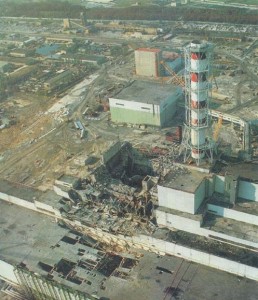
I am writing with reference to letter: "Iran-USA relations," by Dr. Abdul Ruff Colachal (June 18). Dr. Colachal writes about Iran's determination to develop peaceful nuclear energy. But before developing nuclear power, Iranian leaders might do well to take into consideration the dangers inherent in nuclear power and learn from the near-catastrophic accidents at Three Mile Island and Chernobyl.The most famous US nuclear accident took place just two weeks after the release of the anti-nuclear film, The China Syndrome, starring Jane Fonda and Jack Lemmon. When the film was released, it was immediately attacked by the nuclear industry for depicting an impossible situation. Yet on March 28, 1979, a series of failures turned an equipment malfunction at Three Mile Island, in Pennsylvania, into a drama that mirrored many of the scenes of The China Syndrome. As Time magazine wrote at the time: "Reassuring statements spewed from the plant's press spokesmen, sounding as if they were taken right out of the script for The China Syndrome." As the accident progressed, it became clear that no one had any idea what to do. The Kemeny Commission set up by then President Jimmy Carter to investigate the accident, later found that complacency had so pervaded the industry that "we are convinced that an accident like Three Mile Island was eventually inevitable." It judged that a meltdown had been avoided through sheer luck. Or as one witness put it, "Bells were ringing, lights were flashing, and everyone was grabbing and scratching." Two after the start of the accident, Harold Denton, a senior official of the Nuclear Regulatory Commission, told the plant managers to start evacuating people before any serious release of radioactivity. Yet, a day later, they had done little about it. Most people took upon themselves to flee the area. Similarly, before Chernobyl accident, the Soviet scientists and engineers were confident that there was no danger in the use of nuclear energy. In 1985, a year before Chernobyl, the staff at the plant were interviewed for an article for Soviet Life, an official English language magazine for distribution in the United States aimed at readers who had grown skeptical of nuclear power after Three Mile Island. Nikolai Fomin, Chernobyl's chief engineer, assured the world that his plant was "completely safe" for both people and the environment. Boris Chernov, a turbine operator, told his interlocutors: "There is more emotion in the fear of nuclear power plants than real danger." The article in Soviet Life kept returning to the question of safety. Vitaly Skiyerov, the Ukrainian energy minister, assured the visiting journalists: "The environment is securely protected. Sealed buildings and harmless waste disposal, preclude any discharge into the external environment." Vladimir Voloshko, the mayor ot Pripyat where the reactor is located, even sounded an environmental note while talking about car-parking problems: "We don't want cars to squeeze out the people. We believe the town of Pripyat should be as safe and clean as the power plant." The rest belongs to history. Today, Pripyat and areas around it are thoroughly contaminated by the radioactive fallouts of the accident. Children and animals are being born with birth defects and genetic problems. As Timothy Mousseau, a University of South Carolina biologist who studied barn swallows at Chernobyl, says a high proportion of the birds suffer from radiation-induced sickness and genetic damage. Another group of biologists led by Anders Mollar, of Pierre and Marie Curie University in Paris, said that in a study of 7,700 birds examined since 1991, they found 11 rare or unknown abnormalities in the bird population of Chernobyl. The environmental group Greenpeace reported that children are being born with similar disability. The victims of nuclear accidents belong to the future. When he was in Moscow immediately after Three Mile Island, the governor of Pennsylvania, Dick Thornburgh, made, it seems, an astute analogy between members of the Soviet nuclear establishment and nuclear enthusiasts in the West. He was right to wonder whether the accident at Three Mile Island would make a difference in the Soviet Union. Would the unbridled enthusiasm for nuclear power of the Soviet experts be moved by the questions of safety raised by a serious accidentparticularly if it happened on their own doorstep? The question remains germane in Iran today. Moreover, with a country rocked by frequent earthquakes, nuclear reactors remain extremely vulnerable. Any nuclear accident, caused by either equipment malfunction or earthquake might trigger a catastrophe of epic proportions.
|
|

