Towards healthier entertainment
Kajalie Shehreen Islam
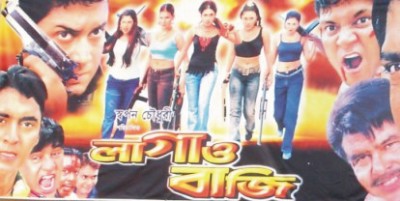
Censorship" has never been a popular word with the media. When it comes to films, however, certain restrictions have always been deemed necessary due to the widespread reach and strong impact of the medium. A visit to cinema halls screening films like Noshta Meye (Unchaste/Wanton Girl), Kukhyato Shontrashi (Notorious Terrorist) and Nogno Hamla (Naked Attack) makes it obvious why censorship is needed.Films have been censored or completely banned for many reasons. Our history of film censorship can be traced back to the Cinematograph Act 1909 in Britain, which was introduced following safety concerns raised after a number of nitrate film fires, requiring cinemas to be licensed by local authorities. A court ruling the following year, however, determined that the criteria for granting or refusing a licence did not have to be restricted to issues of health and safety. As the law now allowed councils to grant or refuse licenses to cinemas according to the content of the films they showed, the 1909 Act thus enabled the introduction of censorship and led to the formation of the British Board of Film Censors (BBFC) in 1912, the name of which was later changed to the British Board of Film Classification. Following this, the Cinematograph Act of 1918 was enacted in British India, basically passed to uphold British imperialism in the sub-continent and, later, the Censorship of Films Act, 1963 in Pakistan. This was amended after independence in Bangladesh. The criteria upon which a film will be regarded as "unsuitable for public exhibition," according to a notification by the Ministry of Information in 1985 are: security or law and order (cannot be undermined), international relations (cannot be threatened), religious susceptibilities (must be respected), immorality or obscenity, bestiality, crime, plagiarism, and miscellaneous. Interestingly enough, while the main criticism of Bangla cinema is in the areas of obscenity and violence in mainstream films, the films most often held at the censor board are alternative films, from Zahir Raihan's Jibon Theke Neya (1970) to Tareque Masud's Matir Moina (1992), Morshedul Islam's Agami and Tanvir Mokammel's Smriti '71 -- all directors and films highly acclaimed locally and internationally. While Matir Moina was said to have religious undertones, films like Nasiruddin Yusuf Bachchu's Ekattorer Jesus were not given certification because they allegedly "distorted historical facts particularly maligning Bangladesh and its ideas and heroes" and Tanvir Mokammel's Nodir Naam Modhumoti because of its graphic depictions of the Liberation War of 1971. On the other hand, mainstream films such as Boma Hamla, Kukhyato Shontrashi, City Terror and Fire and recent releases like Rosher Baidani, Nogno Hamla and Bidrohi Raja, portraying horrific violence and sexual content to the point of pornography continue to run in theatres unabated. Though the Film Censor Board (FCB) claims to be cracking down on such films, its effectiveness comes into question with their screening in cinema halls across the country, especially in district towns. The loopholes of the censorship act are many. First is a lack of clarity and specificity. For example, what exactly is "immorality" and how appropriate and useful a word is it really? What manner of clothing and posture is "indecorous" or "suggestive?" Why the double standards where bikinis or bathing costumes may be allowed only in the case of foreign films and "modest," "modern dress and suitable bathing costume" may be allowed in local productions of export quality films? And where depiction of rape is forbidden, including "attempts or indication" to rape unless it is "intended to condemn it," how does every other Bangla film manage to get away with one to three rape scenes which, at the end of the day, become a source of warped entertainment for the audience? If clauses such as "immorality" and "obscenity" are to exist, they must be more specific, with an outline of just what can and cannot be shown in moviesspecific acts, language/dialogues, etc. On the other hand, there is no separate clause on violence at all. Even though there is a section on crime, physical violence is hardly mentioned anywhere in the act and most mainstream Bangla films are ridden with extreme violence. There should be provisions against unnecessarily prolonged and graphic violence, as well as violent acts that can be easily imitated. It also needs to be made clear whether the provisions under security or law and order, international relations and religious susceptibilities would apply even in the case of historical films and documentaries in which certain depictions may be in breach of these. Some leeway may be provided to historical films and documentaries to allow them to reflect reality and perform an educative function. There can, in fact, be different standards or sets of rules for commercial and alternative films. Clear guidelines will help the FCB to be consistent. Subjectivity is one of the main problems with censorship, and 15 people cannot easily judge what is suitable for viewing by a growing and changing population of over 141 million. Along with the usual bureaucrats and film personalities on the board, the inclusion of media scholars (who would be able to judge the potential impact of films on the audience), as well as common citizens (representative of society and contemporary values and tastes) is advisable. Film education/orientation as well as funding for good films is necessary for filmmakers. A survey of filmgoers is also needed in order to find out what they want to see. Simply assuming that the majority audiencewhose options are few and their tastes unknownare fascinated by obese heroines dancing in skimpy clothing hardly seems fair. Finally, proper enforcement of the law is of the utmost importance. Newspaper reports have revealed that stay orders can literally be bought from the lower courts in exchange for hefty sums of cash, which allows the screening of uncensored films for at least a period of time before further action is taken against them. Sometimes, stay orders are taken even before the release of films. The amendment of 2006 has made it somewhat tougher legally, by barring court injunctions without hearing first from the FCB and increasing the penalty for projection of films, display of posters and advertisements without certificates from three months to a maximum of three years' imprisonment and a fine of Tk. 10,000. The fine can be increased further and hall owners, who often pressurise filmmakers into making sub-standard films for greater profit, should also be held liable for the screening of uncertified/decertified films. It may be noted here that the censorship act applies only to cinematograph films and not to films on video, CDs and DVDs. The unrestricted sale of low-grade films both local and foreign in stores thus makes the act redundant in a sense. Censorship may seem ridiculous to many, in an age where technology makes access so very easy. Thus "cut pieces"containing everything from bathing to explicit sex scenes -- are inserted in films during screening at theatres and censored pornography is easily available on the internet. In this context, doing away with the censorship act altogether, replacing it with an age-restrictive classification system as in the UK, US, India, etc. may be an option. Such a rating system leaves it up to the audience (and, in the case of children, their guardians) to decide what they deem suitable for viewing. Classification is also a more democratic-sounding word, implying freedom of the media to produce what they will and freedom of the audience to accept or reject it. Classification or censorship, the ultimate goal is to provide healthy entertainment for the audience. Knowledge of the society, its tastes and values, clear guidelines stemming from this and, subsequently, their strict implementation and enforcement can make film-viewing a pleasurable and positive entertainment experience. Kajalie Shehreen Islam is a Masters student of the Department of Mass Communication and Journalism at Dhaka University.
|