Bitter Truth
Fighting greenhouse effect without curtailing amenities
Md. Asadullah Khan
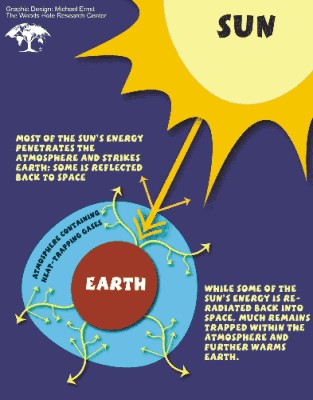
Environmental scientists are now certain that global warming poses a threat to mankind. Which means massive climate change will cause rise in sea levels, chaotic weather patterns, catastrophic droughts in some places and torrential rains in other places -- all caused by small increase in average global temperature.Climatologists are now confident that this warming is at least partly the result of human activity such as the burning of fossil fuel in electric power plants and automobiles. Moreover because populations, national economies and the use of technology are all growing, the global average temperature is expected to rise by 1.0 to 3.5 degree Celsius by the year 2100. The effect will be complex varying considerably from place to place. Of particular interest are the changes in regional climate and local weather and especially extreme events -- record temperatures, heat waves, very heavy rainfall or drought, which will very well have staggering effects on populations, agriculture and ecosystems. This variability of daily temperature would result in public health threats and even unprecedented levels of mortality. Climate change would affect pattern of rainfall and other precipitation, with some areas getting more and others less, changing global patterns and occurrences of droughts and floods. Similarly increased variability and extremes in precipitation can exacerbate existing problems in water quality and sewage treatment and in urban storm-water-routing, among others. People, by now, know what it will take to save the world from the greenhouse effect: To cut emissions of carbon dioxide when coal, gas or oil burn, and the one responsible for more than half the impending global warming, as already mentioned. One will, as such, need to shut down the heater in winter and replace 100 watt bulbs by compact fluorescent lamps. Replacing the standard incandescent with the compact fluorescent can cut electricity by two- thirds. Although fluorescents can cost ten times as much as incandescent, they last ten times longer, saving the consumer money. Substituting incandescent prevents emission of up to 382 pounds of carbon dioxide that would otherwise be emitted from power plants. In the affluent countries of the West people are thinking of trading in the dishwasher and clothes dryer for a dish drainer and laundry line. We have to show superb commitment and a high degree of motivation to avert the disaster that is waiting in the wings. Now we have to think about constructing green buildings. When we are planning to build a house we must hire an architect who would work out ways to optimise the use of energy so that the house does not go for higher billing on heating in winter or air-conditioning during the summer. We have to go to go for using fuel-efficient cars, not just to save energy but also to beat the galloping rise in petrol price hurting the car owners every six months. We must know that for every litre of petrol consumed, about 4 kg of carbon dioxide gets injected into the atmosphere. We must walk and not drive if we have to buy a packet of chips, or a can of coke or soap from the store next door. If we must drive we must combine a lot of chores. It has now been proved beyond any shade of doubt that car exhaust is a major source of the heat-trapping gases that produce global warming. The traffic jam in the roads of Dhaka shows how badly a developing country like Bangladesh needs cleaner autorickshaws, cars, trucks and buses. Thinking in terms of global perspective, the better way to meet the world's energy needs is to develop cheaper, cleaner sources. In India, there has been a boom in wind power because the government has made it easier for entrepreneurs to get their hands on the necessary technology and has then required the national power grid to purchase the power that wind systems produce. Precisely speaking, wind is now the world's fastest growing power source -- a high-tech challenge to the coalmines, oil rigs, nuclear reactors and hydroelectric dams. Experts say wind could provide up to 12 percent of the earth's electricity within just a decade from now. It may be inspiring for us to learn that more than a decade ago, Denmark required utilities to purchase any available renewable energy and pay a premium price, today the country gets 18 percent of its electricity from the wind. Germany and Spain have enacted vigorous incentives for renewable sources. Europe today accounts for 70 percent of the world's wind power. In Japan hundreds and thousands of households have installed solar roof panels since the government offered generous subsidies in 1994, consequently Japan has displaced the US as the leading manufacturer of photovoltaic. India established a fund that has lent $1.1 billion to alternative- energy projects; the country is now the globe's fifth largest generator of wind and solar power. Other technologies can work their own miracles. Micro-hydroelectric plants are already operating in numerous nations, including Kenya, Sri Lanka and Nepal. The systems divert water from streams and rivers and use it to run turbines without complex dams and catchment areas. Each plant can produce as much as 200 kilowatts -- enough to electrify 200 to 500 homes and businesses -- and lasts 20 years. One plant in Kenya was built by 200 villagers, all of whom own shares in the cooperative that sells the power. Along with our efforts to develop cool alternatives, every individual in the country has to shun energy profligacy in their day-to-day work. We must turn computers off when not in use. They consume as much electricity as three 60 watt bulbs and this means avoiding the standby mode. We must switch off the lights and fans when the office shuts down and especially the lights while sleeping. This will mean saving a huge amount of energy that we have never comprehended. Moreover, offices, organisations and business houses, homes in the affluent countries and even in poor countries like ours are indulging in energy profligacy with indiscriminate use of air conditioners. These air conditioners use hydrochlorofluorocarbons (HCFCs) as the cooling fluid and indirectly release carbon dioxide when electricity to run them is generated. HCFCs and carbon dioxide are greenhouse gases. But plug-in cooling needn't turn up the global thermostat. A model patented in the recent past by Albers Technologies Corp.of Arizna in the US cools air to 54 degrees Fahrenheit, dehumidifies it and removes contaminant. Most importantly it uses water, not HCFCs and draws half the electricity of conventional units. Shockingly, even in America makers have hardly expressed any interest -- they don't want to fiddle with their product unless the government bans HCFCs. Only recently, a Saudi Arabian firm, Alessa industries agreed to turn out 25000 every year and export 2000 back to the United States. From now on, we must use public transport to drive down to office or markets instead of using car as a status symbol. In many countries private cars are not allowed to ply on the roads at least in the peak hours with solo driver or with only one companion. If the owner of the car has to drive either on emergency or for any other reason he has to post a fine tag on the windshield of the car. At the same time we must push the government to improve public transport facilities: bus must have comfortable seats and fans over the passenger seats and be sufficiently large. Going back to household chores or farm activities, we have to conserve water and as a first step towards that direction, we must either use sprinklers or drip-irrigation services for watering kitchen gardens, lawns or crop fields. We have to remember that the days of wasteful use of water are gone. It is time that we turn the tap off while soaping our face or shaving. We mustn't let the water flow out unnecessarily. Water is going to be a scarce commodity if we haven't learnt to conserve it now. Scientists are still concerned because penchant for sacrifice to forestall the greenhouse effect is yet to take root in people all over the world. Even in America surveys have shown that only about one fifth of the Americans questioned would keep their homes warmer in summer or chiller in winter to help the environment. But conservation does never mean freezing in the dark and at least it was never agreed on that line in the "Montreal Protocol." From super windows that leak no heat to fridges that work like giant Thermos bottles, "there is a host of technological changes we can make that will let us keep the amenities we are used to," says Eric Hirst of OakRidge National Laboratory. We have got to take concrete actions because other than climatologists, World Resource Institute announced new data that suggest the greenhouse threat as more serious than have been realised. About fifty million acres of tropical forests are disappearing each year, said WRI -- 50 percent faster than earlier satellite photos showed. Deforestation is second only to the burning of fossil fuels as a source of carbon dioxide. Even without any new data, an international panel convened at the urging of the previous American President Bush administration and 38 other countries concluded that global warming will raise sea levels enough to inundate the plains of Holland and Bangladesh and obliterate the Maldives, among other disasters! It called for 60 percent cut in carbon dioxide emissions. And all shades of opinion unanimously agree that conservation is the fastest and cheapest way to do that at least until solar and wind power which emit no carbon dioxide are widely available. This necessarily calls for planting trees because trees are the best sinks for carbon dioxide. If every human being planted one and looked after its growth, we would have six billion trees growing. That could take away thousands of tons of carbon dioxide from the atmosphere. Efficiency, conservation practice and commitment alone, calculates Christopher Flavin of World Watch Institute, could cut global carbon dioxide emission three billion tons a year by 2010, from today's about six billion. Unquestionably true, all countries of the world including Bangladesh can meet their energy needs without fouling the environment. "But it won't happen," asserts Thomas Johansson, an energy adviser to the United Nations Development Program, "without the political will." To begin with, huge government subsidies for fossil fuels must be dismantled to level the playing field for renewables. Policy makers must factor in the price of pollution: say for example, coal plants are more expensive than renewable power when one includes the cost of scrubbers on smokestacks and the expense of health care for coal related illnesses. Factoring in all the disasters visiting us with such frightening frequency, renewable energy is necessary for the assurance of life on earth. There is no time to waste. Md. Asadullah Khan is a former teacher of physics and Controller of Examinations, BUET.
|