Overcoming poverty with microcredit
Manik Chowdhury
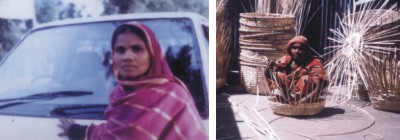
Microcredit is not the panacea for poverty eradication. There is no panacea as such. But microcredit is an effective tool for poverty alleviation. And of course there are other tools as such. But microcredit perhaps has proven itself more effective by now. Quite a few big and many small NGOs are active with their microcredit programme across the country. Not that they have turned each poor solvent, but their coverage of the poor is rising.The initiator of microcredit, Nobel laureate Prof. Yunus has recently said that if we try hard we can make poverty a thing of the past. He is not too far from truth. If the existing microcredit activities can be ten times larger, the coverage of the poor can be ten times bigger, perhaps not far from covering all under poverty line. Bangladesh is a country of more than 140 million and majority of them are poor. The population growth is still not under envisaged control and the number of poor people is of course rising. But the rate of coverage of the poor by microcredit activities (increase in the number of membership of NGO programmes) has been estimated as much higher than the rate of population growth. And their lies the point to be hopeful. More because there are so many success stories of poor and ultra poor NGO programme members turning considerably solvent within not so considerable length of time. For instance, very poor Tara Begum of Mirpur under Sirajganj Sadar thana has become quite solvent and now owns a microbus and eight rickshaws that fetch her a good amount every day. But eight years ago she was too poor to think of two square meals a day. Her husband Nannu Mia used to ply rented rickshaw in the town. But what he earned was hardly enough to buy basic food for the family, not to speak of other essentials, some days they passed on only one meal or no meal at all. Both the husband and the wife were orphans. Tara Begum could have read upto Class VIII at the orphanage. Nannu Mia couldn't have even that. They were poverty stricken much below the line. During such hard time, one day Tara Begum saw a lady persuading a neighbourhood woman, a poor housewife like her, to be a member of her savings group and take loan to do something and earn. Tara Begum also got inspired and consulting with husband became a member of ASA's savings group. It may be mentioned that the lady was an ASA staff. Then began her struggle for freedom from poverty. She took a Tk 4000/- loan in the first instance to buy a rickshaw for her husband. Second time she took Tk 6000/- as loan and added to that her savings of Tk 3000/- to buy six more rickshaws to rent. This way she took loans each year and raised the number of rickshaws to 20, which brought her rental of Tk 400/- at the rate Tk 20/- per rickshaw per day. From this she spent cautiously for the household and regularly paid instalments and also saved. After eight years Tara Begum's household is free from poverty now. Her husband Nannu Mia no more plies rickshaw, instead does the mechanic's works himself for the rickshaws. The couple could construct a semi-pucca house in place of thatched shelter and buy some necessary furniture. They could educate two of their daughters, beyond primary level and give them in marriage with potential bridegrooms. The youngest daughter reads in Class VII. The eldest son has read upto Class X. Two younger sons are also school going. This year Tara Begum has gone one step more further in her enterprise with microcredit. She took Tk 30,000/- small business credit from the organisation, added her own savings with it, sold 12 of the 20 rickshaws and bought a microbus at Tk 2,00,000/-. Now she earns Tk 15,000/- to 20,000/- per month plying the microbus and eight remaining rickshaws. From this she clears installments regularly, meets the family expenses and also saves without fail. She is thrifty, solvent and self-reliant now. She dreams of possessing quite a few microbuses gradually, as she could possess 20 rickshaws step by step. Another success story of how micro credit can cause wonder is of landless, almost ultrapoor Amena Begum's. A landless resident of Hossainpur under Sirajganj Sadar thana she was just a very poor housewife seven years ago. Husband Jahangir Hossain although knew some handicraft couldn't do it on regular basis for want of capital. Then he plied rickshaw. But with such irregular and small income they could hardly procure the bare necessities, often they had to starve with the children. However, one day Amena Begum came in contact with Sohag Landless Women's Group leader Tara Banu who advised her to be a member of the group and take loan from ASA to start their handicraft enterprise. Amena also took a loan of Tk. 4000/- in the first instance, and along with husband Jahangir Hossain started their bamboo craft business. She also took further loans step by step over the years and expanded their business employing 35 workers now. Her husband goes outstation to bring in the raw material -- bamboo, and supply the product -- bamboo baskets, beyond local market to Rajshahi, Comilla etc. The workers at her factory are paid Tk. 80/- on an average per day. The working capital is estimated to be around Tk. 40,000/- now. She has taken Tk. 20,000/- loan at the latest. Her monthly income is about Tk. 10,000/- now. She regularly pays her installment and also saves as much she can. The family no more faces hardship. The couple's only sorrow is that their eldest daughter is handicapped. The other daughter reads in class VI, and son in class IX. Amena Begum wants to give her children higher education so that they never have to bear the brunt of poverty. Amena Begum is solvent now. Micro credit has changed the course of her life. She now advises others to come out of the vicious circle of poverty with the help of micro credit. She has bought some land and built a semi-pucca factory shed. She wants to expand it further to provide employment to more people. Her husband Jahangir Hossain is also optimistic with the demand for their products in the market. If with more of the loan they can produce more, they can sell more, he believes. And they being enterprising it does not seem very hard either. Hopefully they will be flourishing further in future. Now these are only two success stories of only one microcredit provider -- ASA, which must have many other such success stories at many other places of the country. And there must be so many more success stories with other major micro credit providers -- Grameen, BRAC and Proshika, not to speak of so many more small NGOs across the length and breadth of the country. With millions of members under their fold, no doubt such success stories can be termed as innumerable. And with more innumerable success, semi-success and sub-success real stories, mitigation of poverty should not remain a far cry for a long period. Manik Chowdhuy is a freelance contributor.
|