 |
|||||||||||||||
| Home | Dhaka Saturday July 21, 2007 |
||||||||||||||
Striking fear in the docile and the ignorant
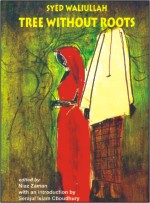
Tree Without Roots is a portrayal of the life and culture of rural Muslims of Bengal in the early forties. More importantly, it stands out as a remarkable piece of literature for one reason in particular, that is, in terms of its relevance in present-day conditions, definitely in the rural areas and also to a fair extent among educated Muslims inhabiting urban areas. Therefore, to a reader, it feels as if the early 20th century and the beginning of the 21st century are contemporaneous in terms of the significance given to the overriding theme of the use of religion. Most people seem to be vulnerable to social transformation, changing patterns of life and obviously lacking in courage to think for and assert themselves. In such light, Syed Waliullah seems to be a visionary depicting not only what happened then but also having a periscopic view of things to come as we experience them today. We know that things have not changed much for the better since then. The protagonist of the novel, Majeed, being a crafty person lacking in every other quality of character except having some mastery over the edicts of religion, can easily find out what and who will be his target group over whom he can reign to earn his livelihood. Rural people, basically being innocent and gullible, become an easy prey and not surprisingly because what matters in this transaction is one of the most sensitive aspects in the lives of the majority of the people, that, is, religion. Rural Muslim communities cannot be any exception to that. Wielding religious mantras and power over the deprived, disadvantaged people of Mahabbatpur who otherwise are not so desperate in spite of some of their miseries turn out to be a viable business ground for Majeed. His sole weapon is striking at their hearts with a motive to arouse the instinct of fear and exploit it fully to his own advantage, an instinct as primitive in the life of a human being as the dawn of history. And he succeeds by invoking the Creator and His boundless power over His creation in his very own way. A vile character living on the miseries of others, Majeed however might draw little sympathy from a reader. Apparently unable to fend for himself by trying his hand at some other jobs, however odd those might he, he ultimately takes to the business of selling religion and soon finds buyers to take it. There is an absolute surrender to his preaching of religion covering personal, social, moral and obviously economic lives of those people. As he ascends the scale of earning both in cash and kind, his greed for women also goes up. And only here he confronts opposition and defiance from his very young second wife Jamila. It shakes him up, yet in order to uphold his supremacy not only over her but also all of Mahabbatpur, he starts imposing sanctions on her all the more mercilessly but with little or no effect at all. Thus Majeed tastes defeat for the first time in his own family, eventually to face a far graver defeat. His friend Khaleque, although a well-to-do man in the village contributing much to the cause of the spread of Islam especially at the behest of Majeed, cannot raise his voice against him although he tries to do so rather weakly. The only time he can assert himself and that too momentarily is when his first wife Amena is in a pathetic state caused by Majeed. As it is, Muslims by and large are very reverential of pirs, fakirs and religious leaders. Therefore, it is no wonder that Majeed can induce fear, awe and a sense of guilt in the minds of the basically docile population of Mahabbatpur, thus leading them to feel remorseful at their ignorance of the existence of a nondescript grave containing the remains of a fictitious individual. Thus Majeed's kingdom grows bigger and his domination mightier. He plays god to all those around him and demands total supplication from them. Blinded by an irrational adherence to religion, hardly is he ever aware of what might befall him subsequently. Such people do exist in our society even today as we have known from their utterances, fatwas, et al, all emanating from their make-believe, false sense of religiosity. Probably no other religion has been as much mutilated as Islam thanks to the illiteracy among the majority on which vendors of religion have been thriving and flourishing. It is not that Majeed never feels a slight pricking of conscience at selling religious falsehood. But that is most fleeting because it is primarily seen by him as his only means of earning a livelihood. So much for his faking a pious life. Although Majeed will not bend, still his defeat for the second time comes when he has to deposit his two wives at Khaleque's home totally unsolicited. And the final defeat that he will experience remains on hold as he will not leave his home and shrine that he has built inch by inch with ingredients of blatant lies lest people witness him cowering in the wake of an almost all-consuming deluge as an ordinary human being. Since the day he plants his feet on the soil of Mahabbatpur, he has impersonated an individual he is not. With a vivid portrayal of rural Bengal, its people, their lives and culture in all their naturalness; and with his use of simple but powerful English, it is quite enigmatic why Syed Waliullah did not contemplate publishing this book in his name. In my estimation, there ought not to be any comparison of this book with its original in Bangla since Tree Without Roots is substantive enough as a novel in its own right. The introduction by Prof. Serajul Islam Choudhury provides a summary of the book and, therefore, is an invaluable part of it. However, words that are printed in italics could have been accompanied by their meanings in footnotes as the English version is primarily intended for non-Bengalee readers. In the end, the reader is left with an image of the protagonist who, although both a loathsome and pitiable character, is nevertheless a man of principle: till the end he adheres to his professed belief in his own version of truth that actually has been untruth in its purest from.
................................................................ A sage by the river Jamuna Shahnoor Wahid spots old tales of wisdom and talks about them
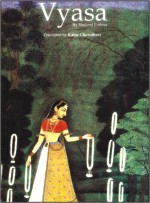
The afternoon of 7 July could not have been spent better if I had not mingled with the small crowd at Omni Books in Dhanmondi to listen to the discussion on Prof. Kabir Chowdhury's latest work of translation, 'Vyasa' (pronounced Bash in Bangla). The discussion aroused curiosity in people like us to know more about the original writer and at the same time enjoy the mellifluous translation of Prof. Chowdhury that we are so familiar with. Getting a copy from a covertly content Neo Mendes, the publisher, was not a difficult chore. Vyasa was written in Bengali by Shahzad Firdous, a writer of West Bengal. After coming across the book and finishing it in 'two sittings' (as Professor Kabir Chowdhury said with a smile), he could sense the appeal the story would have on the discerning readers who have read the epic Mahabharata, even if in bits and pieces. About the book that caught his fancy, Prof. Chowdhury has to say this in the translator's note: “The famous epic Mahabharata had drawn the admiration of many people for centuries. In the present work we get brief glimpses of several moving episodes of the famous epic, but the author's main focus is not on the epic as such but on its creator, the great Vyasadeva, the details of whose life are little known. Shahzad diligently pursued whatever material he could lay his hands on, followed up the various hints he found in legends, certain Vedic texts and the Mahabharata itself, wove them together and created a full-fledged character. His Vyasadeva is at once rugged and tender, a visionary and a doer, a philosopher and a poet, a person of flesh and blood like us, and yet a unique individual.” And the publisher introduces the author with the following words: “Shahzad Firdous, a writer of West Bengal, India, has already made a name for himself as a novelist for his original ideas and liberal-humanistic attitude to life and its multifaceted problems, both mundane and spiritual. These are amply reflected in such works of Firdous as Ohi Nakul, Palat Mudra, Mahabharata, Plague, Altamas, Shyloker Banijya Bistar, Kanongon, Mrityur Janmo O Mrityu, Atmobhojoner Khela, Shomoyshima O Dos Second and Vyasa.” “The information one finds in the Mahabharata and other mythical and legendary books about the life of Vyasa is not enough for creating a character. There are long discourses by Vyasa in the Mahabharata on philosophy, religion, politics and many other serious issues of life but practically nothing about his personal life. He appears at times of crises, dispenses wise counsel and is gone. Besides the accounts of his birth, the birth of his son Shuka, of the production of sons by him for the sonless royal household of Hastinapura, of Shuka's renunciation of everything for gaining self-knowledge and of Vyasa's deep anguish as a father at this action of Shuka everything else that one finds in the Mahabharata about Vyasa is given only in hints and suggestions. I have pieced together those suggestions and hints and tried to create a full-fledged character.” Romance and hatred, intrigue and warfare come in the novel just as swiftly as the flowing river Jamuna. And the ancient words of wisdom that come every now and then in the story would stir the mind of a reader and set him contemplating the present-day social and political world. Yes, a committed reader would find it difficult to put down this book as events of extraordinary nature begin to unfold one after another before Vyasadeva as he walks on the track of life in search of knowledge, wisdom and enlightenment This reviewer takes the liberty of comparing the journey of Vyasa with that of the Greek hero Odysseus. Vyasa travels alone through strange lands and mingles with strange people in quest of knowledge. He learns from men, women, children, birds, animals, hills and flowing rivers. Odysseus also travels alone on his return journey through strange lands and overcomes many an adversary. Like Odysseus, Vyasa has also seen great wars, death, mutilation, misery and anguish. Both know the meaning of betrayal of friends and close kin. But there are differences in the life of the two lonely characters as well. Though Odysseus fought his enemy with wit and physical strength, Vyasa faced his adversaries with wit and reasoning. Vyasa left his home and family to seek knowledge while Odysseus sought answers to riddles so that he could reach home and join his family. Odysseus gets back his son, but Vyasa loses his. Odysseus finally reaches home. But Vyasa? Does he ever reach home? The book turns out to be a fascinating read for the stimulating dialogues and monologues bordering on the esoteric. Here are some examples: Krishna asks his father: Where does the king live? His father answers: In the palace. In chapter fourteen, looking at numerous servants and maids, abundant food on the table and guards all around, Vyasa says softly as he looks at Bhisma: “I am thinking a healthy person is sufficient for himself, yet a thousand servants and maids are not sufficient for a king, a thousand guards cannot provide his security, a thousand women cannot satisfy him. Is a king inhuman or is he weak?” In reply, Bhisma says, laughing: “…as long as a king is strong with the strength of others he is inhuman. When the strength of others is of no use to him he is just a man a common weak man.” In the final chapter, towards the end after the great war between the Kauravas and the Pandavas, Vyasadeva says to his disciples: “Take it down flaming greed invited jealousy. Jealousy invited anger. Anger invited war. War invited death. And death has killed life.” Vyasa, in brief, will perhaps inspire many readers to read the epic Mahabharata.
.......................................................................................... Tales across the Bengal frontier Farida Shaikh observes life in cultural unity and likes the flavour
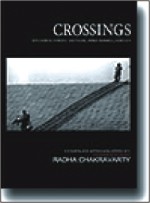
The original short stories in Bangla were compiled and translated into one volume by Radha Chakravarty. The tales are situated within the same cultural context, Bengal, wherein artificial boundaries are transgressed to combine the writings that have the reality unfold in so many varied dimensions of human emotions. These then echo from within the depths of the human psyche that range in myriad shades. The tales of ordinary individuals as they grapple with forces larger than themselves, these narratives leave an indelible impression. Aukal Darshan, a short story by Showkat Ali, comes to the reader as A View of Famine or rather A View of Hard Times. The story is about famine and hunger which is like a blazing flame that engulfs everything. It obliterates all distinctions and reduces all living creatures to a common denominator of the biological being. The story also has a satirical twist to the social classification of class, wherein the elite and the educated Abid are unable to fathom the fear of famine and the heartlessness of hunger. It is a matter for menials and lowly individuals like Akkas Ali to comprehend. Incognita by Rashid Haider is a romantic story that begins with a casual telephonic talk with a melodious voiced woman that soon turns into an expectation and enjoyment of the heart, until the sudden discovery of the grave and gloomy event that encircles the life of the unknown woman. Rizia Rahman's Irina's Picture is the image of an orphaned girl connected to the public theme of war and peace and the breakup of relationships within the family. The protagonist, described as a poet by the mother, is perplexed and questions, “Who says I'm a lunatic?” while he watches family dynamics in helpless rage. Gopal in Selina Hossain's Spent is a terrorist, and while alive has been used by many VIPs for their own empowerment. When he is dead and even though the pager is continuously beeping, there is none to claim or cremate his body. Exposed to domestic violence at a very early age, he takes to crime. His aggressive ways draw the attention of the politicians who use this trait to suit their devious plans. Hidden within a veneer of the rough and tough, Gopal has a tender heart with love for his mother and has dreams and longings for the beautiful. Hasnat Abdul Hye's Still Life is a painting in words, a portrayal of life and love that is no more. Inanimate objects convey the pain and the pathos of the two persons in the silent photo frame. The writing on torn pieces of paper is a disjointed tale of a broken home. Birds and sparrows have no sorrow, fly freely and joyfully in and out of the open window, busy building a nest. On the empty wall of the room, small predators and lizards prowl, without fear. In Secret Life, Public Death, Shamsul Haq explores the tormented soul of Shukur Mohammad, the man who has committed one sin after another in his private life and has always got away with it. The climax of his forbidden desire which he has nurtured for some years comes in his attraction for his beautiful daughter-in-law Mariam Bibi. Hasan disappears. Shukur seeks redemption in public. Death follows without burial rites. As individuals, Shanta and Arif are each alone. They are together in a bonding due to social pressure in the story Alone, Together by Manju Sarkar. Grounded in an ordinary middle class family, the compassion between the couple does little to unlock the trap of a loveless marriage. Is this, then, the nexus of a social façade? In Mother-Daughter World, by Hasan Azizul Huq, the tale is set amidst dense forests, the protagonists removed from civil society. They are attacked by four animals in the guise of male figures, who assault and rape the mother and daughter. Surrounded by the wilderness, their abject pain and suffering gives rise to a state of hopelessness. “Allah is there for alcoholics…scoundrels, bastards…. Men folk, they have everything and they have Allah as well.” Rahat Khan's story, The Shape of Things, is about the downfall of the urban upper middle class due to its obsessive pursuit of material pleasures. Three couples on their way to a picnic indulge in forbidden fantasies, oblivious of the procession of angry workers headed towards them. The forest with a such variety of trees, the river with its own kind of fish and a lonely moonlit landscape gradually turn into a mindscape, as the characters peer into the abyss of their own repressed guilt. Return, in the Moonlight by Jyotiprakash Dutta evokes a ghostly presence that spreads terror and instills fear of discovery. Private tuition is essential for children seeking admission to a school as also for them to cope with the school curriculum. It is a tremendous experience for most parents and their children. Rainbow Colors by Suchitra Bhattacharya narrates the pressures of the rat race entailed upon the child and the mother until the realisation by the latter that it is the simple things in life that are important and not textbook knowledge. A Dream Day by Sunil Gangopadhyay is a romantic intermission mingled with dreams and desires of the heart and the humdrum routine and rigidity of everyday life. The beauty of this brief interlude becomes the cherished memory that remains and is cared for. Marriage is a social construct overriding the individual's psychological needs. Social practices and attitudes arrest the working woman's expectations from life. Dibyendu Palit in Wonder Story explores the social implications of an arranged marriage through the narrative of Shohini Eradication of poverty by doing away with the poor is the path for progress, particularly material progress like beautification of the city. In Mahasweta Devi's Jamunaboti's Mother emerges the tale of the hard reality of hunger and malnutrition. The affliction confronts the child Jamunaboti while her impoverished mother oscillates between nightmare and daydream. The story raises the priority question that needs to be addressed, between saving the lives of the poor and putting cosmetic touches to the city. The antics of a precocious child end in pain and devastation, a tale of innocence and violence is central in Debes Ray's Ranju's Blood. Raft by Sirshendu Mukhopadhyaya is a science fiction based story that contemplates changing social mores and the dehumanising effects of so-called 'progress.' Consumerism mixed with class-consciousness is the force or energy that transforms Debnath from simple seafarer to covetous collector of luxury items. Atin Bandyopadhayay's Amazing Light combines the voyage genre with adventure to bring to the forefront images of a rapidly changing society. Proprietor by Nabaneeta Dev Sen explores the impact of divorce on the relationship between mother and child. The adult mends the pain from a torn emotional bonding through the new-found confidence that Mita subsequently acquires. Loss of innocence is the central motif in the story by Sadhan Chattopadhyay, where sixteen year old Aditi romanticises her encounter with the local MLA, imagining that the new bus link to the city is really the politician's personal gift of Six Midibuses for Aditi The story compares the growing pains of the young girl with the dream of modernisation that affects her entire village. Debabrata Deb's Gangacharan's Champreng is a musical used by tribes in Tripura. The story is about one man's Rabichandra longing for beauty and tradition in the face of violent social change. He remembers his father, Gangacharan Debbarma, playing the champreng on a moonlit night and he, too, yearning to play such beautiful music. This is a collection of contemporary Bengali fiction made available in English with all the necessary indigenous essence and local flavour. It has meshed in with notes, so that a reader with limited familiarity with Bangla culture feels comfortable.
............................................................................ On a tiring run
We all expected Monica Ali to win the Booker Prize in 2003, if not for anything else than for the fact that she is half Bangladeshi by birth. Ali's book Brick Lane was both longlisted and shortlisted for the Man Booker Prize award. Surprising everyone, DBC Pierre got the prize that year for his work Vernon God Little. Just like Ali, Pierre was also an outsider in the literary world. DBC Pierrie's real name is Peter Finlay. Apparently DBC stands for 'dirty but clean' as he had led a a very eventful life starting from using cocaine to borrowing money from friends without ever paying them back. In the end, he tried his hand at writing which finally made his list of achievements include the Booker Prize. DBC Pierre was born to British parents but was brought up in Mexico and Australlia. He says that he feels culturally uprooted as he did not belong to any one particular place or country. Vernon God Little is the narrator of the novel who belongs to the Eminem generation of today's Martirio in Texas. According to Professor John Carey, the chairman of the jury, the book is "a coruscating black comedy reflecting our alarm and fascination with modern America". The book has been compared with Mark Twain's Huckleberry Fin and J.D. Salinger's Catcher in the Rye. A 15-year-old Vernon Gregory is a Texan teenager whose physical and spiritual journey is depicted by Pierre as he absconds after being released on bail in a trial. He is accused of killing eighteen of his classmates. It was in fact Jesus Navarro who committed the murders before putting the gun to his own head. Vernon's mother's associate and lover Eulalio Ledesma follows his fugitive life and proves that he was actually involved in the murder of thirty four people following the killing of eighteen of his schoolmates. Before crossing the Texas border Vernon meets his only friend Taylor Figueroa for whom he has had a long-standing infatuation. Vernon wants her to accompany him on his flight. But she has a boyfriend and has come to shop for her lingerie for their next date. Heartbroken, Vernon starts his journey alone. His experience in Mexico wizens him up a bit; but that does not prevent the protagonist from being lured to a hotel to meet Taylor. Taylor Figueroa does not hesitate to hand him over to the police. The whole show is orchestrated by Lally, the manipulating TV reporter who makes a fortune out of Vernon's case. Vernon tells the court that he has been running an errand for one of his teachers, Mr Knuckles, and has further delayed by his bowel movement. But Knuckles fails to testify to Vernon's innocence as he had lost his wits after the incident. Even though the boy is on the run he is accused of committing thirty four murders altogether. Readers are sometimes shocked with the Texan language that seems to emanate from the characters. It is nonetheless a true picture of the Eminem generation (even I would not have known anything about the Eminem generation had it not been for a student who did his presentation on 'hip hop' music in class) who use a lot swearing in their music and use shocking phrases in their vocabulary. Even then Vernon has a poetic quality in writing his rap about his night time bike ride: “I ride down empty roads of frosted silver, trees overhead swish cool hints of warm panties in bedclothes.'' The book has been criticised for showing a side of America that only Americans are aware of. DBC Pierre is bold in his portrayal of how the American media rules people's lives. Fast food, homosexuality, reality life shows and death among the younger generation have been portrayed with vividness. Pierre uses a lot of irony in this novel. It is satire that makes us laugh, with a feeling of guilt. It is a good book even though it shocks readers with the language used.
...........................................................................
© Copyright thedailystar.net 2007 |
|||||||||||||||

 Sardarer Shonglap
 Amra Ki Ei Bangladesh Cheyechhilam
 Raat Bhore Brishti
 Nirbachito Probondho