
|
 |
|
|
| Home | Issues | The Daily Star Home | Volume 6, Issue 21, Tuesday, May 24, 2011 |
|
|
|
REFLECTIONS
Cha ghor In ancient times, the cultivation and drinking of tea spread from China to Japan, Taiwan and Southeast Asia. Tea or chai in Cantonese was first tasted in the European continent in Lisbon, Portugal in the sixteenth century. This week, we trace the timelines of tea and explore our traditional cha ghor in our villages and sub-town cities. Tea is a drink made by steeping processed leaves, buds or twigs of a tea bush in hot water for a few minutes. There are four basic types of tea: black tea, oolong tea, green tea and white tea. The term 'herbal tea' usually refers to infusions of fruit or herbs such as rosehip tea and chamomile tea which contain no tea leaves. Tea is a natural source of caffeine, theophylline and so on and it has a cooling, slightly bitter and astringent taste. In Bangladesh, local tea stalls have an earthen, rustic look to them. In reality we have never opted for aesthetic enhancements for our tea stalls. They are normally located at railway or bus stations, near bazaars and factories or other areas of business.
Tea first arrived in our country during the era of British rule. Retracing the history or literature of that period reveals that tea was initially intended for the consumption of men while they leisured in their living rooms or baithak khanas. Women who drank tea in that period were often criticised. The history of the Bangladeshi tea industry dates back to around 1823 when tea started to be grown for commercial purposes in the Assam forests. In 1855, the Assam indigenous tea plant was established in the Chandghani Hills of Sylhet.
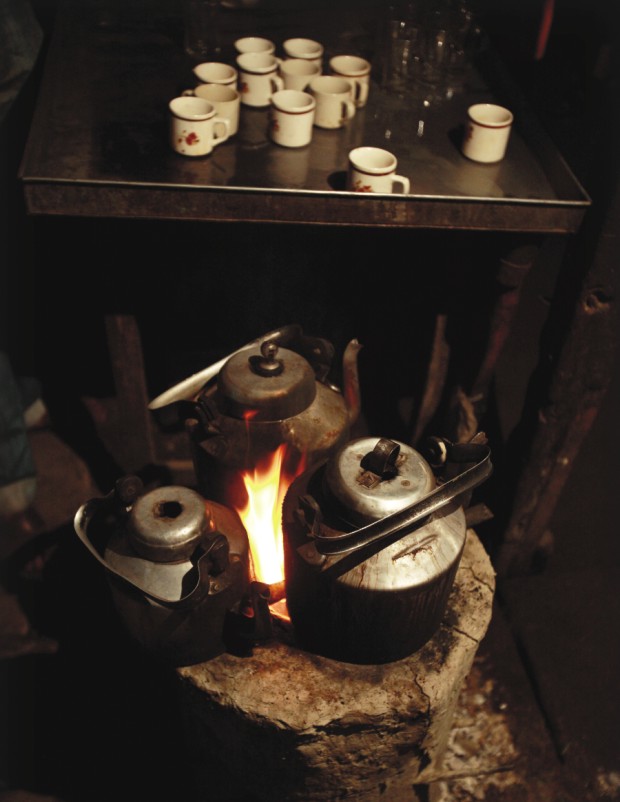
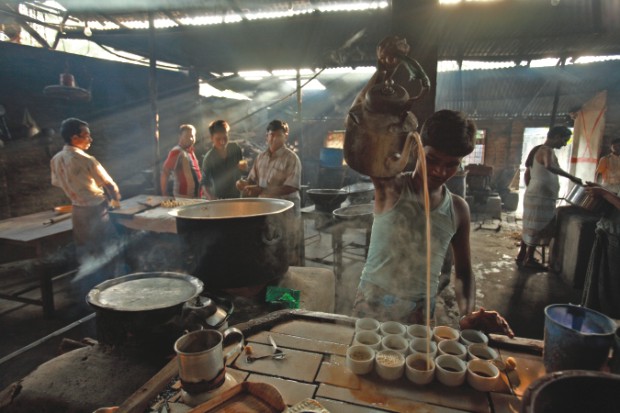
In recent times, tea has become one of the most popularly consumed and widely available drinks in Bangladesh, and indeed, in the rest of the world. Our local versions of tea houses or tea stalls are called tongs or cha ghor; these open early in the morning and fortunately for some, serve customers well into the night. They are usually run as small enterprises, with a young boy happily serving customers and performing basic functions of cleanliness and the owner managing the cash box. In rural areas, tongs are constructed of purely natural materials, often using combinations of wood or tin walls and thatched roofs. In both rural and peri-urban areas, clay burners are widely used. A beautiful silver kettle, soot-blackened from use is constantly on the boil as is a round saucepan with milk on another burner. Cha tongs usually have benches or wooden seating arrangements and they stock a variety of biscuits, bananas, potato chips, chocolates, mints and cigarettes. Tongs do not subscribe to urban or extravagant rules of decor but they have their own signature styles in terms of fixtures and fittings.
A cha tong is not a simple tea house; it is also a news room for a remote village. People come here to discuss and deliberate on politics, to listen to the news on the radio and to catch up on local gossip. With the advent of numerous Bangladeshi radio stations, the youth of the village gather at the stalls to listen to music and talk shows. Similarly, the root of all rural political discussion can also be traced back to the gatherings at cha tongs. Cha tongs have long become a common and welcome sight for travellers on inter-city highways, providing them with much needed respite and refreshment. Stop by at a tea stall near you and discover the little cup of magic! Nazneen Haque Mimi CHECK IT OUT Bangers & Mash: A misinformed look
I find myself suitably equipped to perform in Bangladesh, because I've been to Kolkata. Twice. As per my detailed research, Bangers - I assume this is the short form for Bangladeshis, especially based on your population - are basically Kolkatans without the condescending air of a British person, so common to Indian Bongs. Of course, this research may be skewed since I based it entirely on Athar Ali Khan interviewing Mohammad Ashraful. My views may be as short sighted as Ashraful at the crease in '10 - '11, but I proceed unhindered, unlike the specialist cameo batsman. I am delighted that my trip to Bangladesh occurs now and not pre - 1971, when most of my research on you would have involved me going to Karachi, which honestly is a bigger pimple on a person's visa than the 'before' picture in an acne cream ad. But, let me not paint the picture of the cliché Indian neighbour spouting venom at his Pakistani friends. I'll leave that to the Navy Seals. The following are just 5 traits of the Bongs of Kolkata and how they apply to you wonderful Bangers: What's in a Daaknaam? Adda-das: Impossible is working Men & Bengali Wow-men! Clubbing scene “Is Nizam's good?” Which is why all across Bangladesh I will compliment every restaurant by mentioning how their food tastes like it was made 400 years ago. I expect love. Bangladeshis are not at all like Kolkatans So please don't be Kolkata, Dhaka. Be yourself. Be the best Banger you can be. I thank you. Sorabh Pant performs his comedy special, “Pant on Fire” at Naveed's Comedy Club on 26, 27 and 28 June. 8 pm onward. Tickets at Tk 500. Call/SMS: 0191 429 6455 (Tk50 per delivery) By A Mumbaiite On Bangladeshi POP UP About chocolate Studies show that eating it increases the amount of serotonin, an antidepressant, and the release of feel-good endorphins in your brain. Derived from the cocoa plant cacao, chocolate is mixed with fat, cocoa butter or oil, and sugar to produce the sweet, edible version. And some forms, including dark chocolate and cocoa, contain anti-oxidants that potentially reduce the risk of heart disease. For something different try, unsweetened chocolate. It's pure chocolate liquor from ground chocolate beans, and it has a bitter taste. |
||
| home
| Issues | The Daily Star Home © 2011 The Daily Star |
|
 Near about the same time, wild tea was found growing in the Khasiand Jainta Hills. Around 1840, tea plantations started developing in Chittagong. The first commercial tea plantation was established in 1857 in Mulnichera, Sylhet
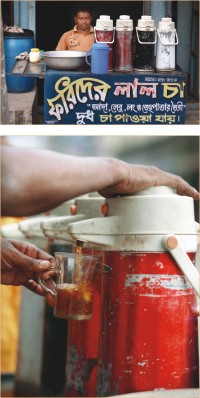
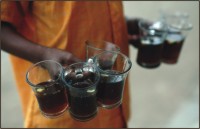 Their snacks are usually stored in transparent jars with red caps and their lighters are conveniently hung from string on their shop fronts. Most distinguishably, they serve tea in simple white cups or small transparent glasses that have become quite the domestic trend of late.
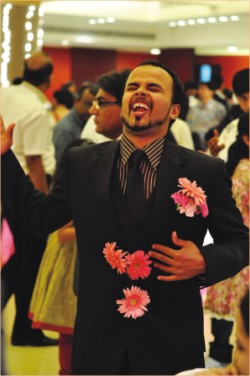 Stand up comedian from Mumbai, Sorabh Pant paints Bangladesh with a Kolkatan hand brush and discovers he's more off the mark than a Communist at an American pie eating contest.