Business
Person of the Year
Fast
mover in poultry
 Stories
of professionals creating successful enterprises
are still rare in this country. That of
a trained architect entering an unrelated
sector like poultry has got to be absolutely
unprecedented. But that is exactly the saga
of Kazi Zahedul Hasan.
Stories
of professionals creating successful enterprises
are still rare in this country. That of
a trained architect entering an unrelated
sector like poultry has got to be absolutely
unprecedented. But that is exactly the saga
of Kazi Zahedul Hasan.
Born
in 1941 in Dhaka, Hasan graduated from BUET
in 1962 and joined the same institution
as a lecturer. In 1963, he availed of an
USAID scholarship and left for an architecture
degree at Harvard University. He returned
to the country after four years and started
teaching again at BUET while working part-time
at an architectural firm. In the next ten
years of his life, Hasan went through a
series of major life-changing events. Starting
with marriage in 1968 and the birth of his
twin sons, he went back to Massachusetts
for his wife's PhD and then moved to Saudi
Arabia to teach at King Abdul Aziz University.
Hasan
returned to the country for good in 1983
and made a sequence of decisions that eventually
led to where he is today. At the beginning,
he did what was probably most expected of
him -- he opened up his own architectural
outfit. But soon, intrigued by the booming
sector of export-oriented RMGs, he launched
Kazi Fashion Ltd. In 1995, he bought a large
piece of land in Sreepur to construct a
textile factory that would feed into his
garment-making unit. Constructed on 2 bighas
of land, the textile factory still left
another 30 bighas idle. Toying with ideas
of how this land can be utilised, Hasan
at first tested fish cultivation. The quality
of the soil, however, was not conducive
for water retention. At this time, destiny
played a major role. On a trip to Delhi,
he met, through friends, a man who was a
pioneer in the Indian poultry business.
From then on, Hasan's life shifted onto
an entirely different track.
Enchanted
by the peace and quiet of poultry farms,
which proved especially refreshing after
the perennial problems of RMG production,
Hasan eagerly studied the Bangladeshi poultry
market. The sector was completely new to
him but he discovered immense potential
in the fact that the commercial poultry
breeding industry was fragmented at that
time - a few breeding farms existed but
were not profitable and had not implemented
much of modern technology. Aggregate market
demand was definitely not being met locally;
on the other hand, imports were expensive
and there were not enough flights available
to carry live cargo. Overall, it seemed
like a perfect scenario that demanded intervention
-- and the Ivy League architect was more
than willing to chip in. Hasan traveled
to numerous countries that are currently
the top names in the poultry sector, i.e.
Thailand, Malaysia, Taiwan, US, Philippines,
etc., chose the latest technologies and
promptly launched the first company of Kazi
Farms Group, Kazi Farms Ltd, in 1996.
Today,
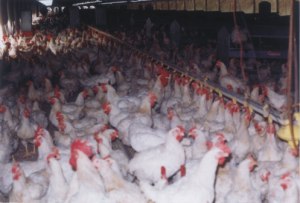
the group is engaged in a whole range of
integrated poultry activities, starting
from parent stock chicks and day-old broiler
and layer chicks to broiler chicken, hatching
eggs, and commercial feed, through numerous
enterprises. Group turnover stands at Tk
1.2 billion, having grown at a phenomenal
rate despite calamities like flood and rumors
of bird flue, and now amounts to 35 percent
of the total market. The company employs
a large number of trained expatriates, local
poultry veterinarians, and management specialists.
It also has a well-equipped poultry laboratory.
Till
date, Kazi Farms has played a pioneering
role in numerous aspects of the poultry
sector. The group launched the first grandparent
stock farm in the country meaning that local
breeders no longer have to pay high prices,
in foreign currency, to source the parent
flock from abroad. From February this year,
the company has also started exporting hatching
eggs, i.e. eggs that are used for commercial
poultry meat production, for the first time
in Bangladesh. With the support of international
partners and affiliations, Hasan has made
sure the best practices are implemented
in these highly scientific processes for
optimum productivity.
The
group also places enormous importance on
ensuring quality. Its international standard
production and performance levels have gained
much popularity among customers. It has
also gained genuine goodwill because of
its discipline in loan repayments. Also
noteworthy is its role in environmental
stewardship -- Hasan truly believes in building,
operating, and maintaining its facilities
in a manner that is consistent with the
long-term sustainability of the eco-system.
So
what key challenges did this professional-turned-entrepreneur
face at the onset? Hasan, retrospectively,
admits that doing business in Bangladesh
is difficult, especially after living abroad.
Still, what works are the support system
of friends and relatives and the individual
determination to persevere. Besides, he
adds, "Bangladesh has a lot of opportunities
to offer. For instance, you cannot even
think of entering poultry in mature markets
like the U.S. Work and patience do pay off
here."
In
terms of future plans, Hasan has a lot in
the pipeline. Kazi Farms is considering
further processing of its products and offering
more value-addition in terms of dressed,
ready-to-eat, and organic poultry products.
In the imminent years, local production
can easily capture the regional export market.
Food product export from Bangladesh is generally
not perceived to be an easy task, for example,
Europe requires stringent compliance as
a prerequisite but overall it is very much
achievable. Currently, there are 150,000
poultry farms and 130 poultry breeders in
this country. This recognition will hopefully,
not only encourage Hasan in his future endeavors
but will also raise the expectation level
and benchmarking standards in this high-potential
sector.
Enterprise
of the Year
Turning
innovation into practice
 After
RMG, if the "Made in Bangladesh"
seal promises to make a serious dent into
another global industry, that industry has
got to be pharmaceuticals. And who else
deserves to be recognised more in the budding
arena of Bangladeshi pharma, than one low-profile
company that has grown in leaps and bounds
to develop 53 new molecules within a span
of 5 years! The company we are talking about
is none other than Incepta Pharmaceuticals.
After
RMG, if the "Made in Bangladesh"
seal promises to make a serious dent into
another global industry, that industry has
got to be pharmaceuticals. And who else
deserves to be recognised more in the budding
arena of Bangladeshi pharma, than one low-profile
company that has grown in leaps and bounds
to develop 53 new molecules within a span
of 5 years! The company we are talking about
is none other than Incepta Pharmaceuticals.
Incepta
began production in 1999 with a handful
of generic products which were then sold
over-the-counter. The USP of these products
at that time had been sheer price competitiveness.
But management had always aspired to provide
innovative import-substituting drugs. In
that spirit, the first local AT1 receptor
blocking antihypertension drug was produced
and launched at Tk 6 vis-à-vis comparable
imports which were sold at Tk 80. The medical
community appreciated this move greatly
and endorsed the product. Over time, a series
of other new products were developed and
successfully launched. Incepta's product
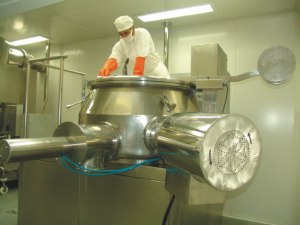
range to this date is comprised of various
types of dosage forms including tablets,
capsules, oral liquids, ampoules, dry powder
vials, powder for suspension, nasal sprays,
etc. The company specializes in value-added
high technology dosage forms like sustained
release tablets, quick mouth-dissolving
tablets, barrier-coated delayed release
tablets, etc. Today, Incepta's turnover
stands at Tk 1.2 billion with a product
portfolio of 125 brands and almost 1,500
employees. The company is, at the moment,
in the process of exporting to thirty different
countries of the world.
Such
stellar success for a new entrant would
obviously not have been possible without
the support of a few critical processes:
a world-class manufacturing capability,
an excellent marketing and distribution
system, and a dynamic corporate culture.
In a short period of time, Incepta has been
able to build up a state-of-the-art production
factory on a 160,000 sq ft area in Savar.
Once the current upgradations have been
completed, this factory is expected to be
one of the best in the country. Secondly,
an efficient and competent marketing and
distribution system has been the priority
of top management since the very beginning.
With the help of 13 depots geographically
spread around the country, the company now
covers a large number of rural as well as
urban areas in Bangladesh. Last but not
the least, the innovation-focused mindset
has truly permeated all levels of the organisation:
whether it be in terms of developing more
and more new products or recruiting of new
graduates for fast-track development and
higher responsibilities. At Incepta's helm,
remain three talented individuals who had
been part of the initial set-up team persons
who are outstandingly capable in their areas
of expertise. Abdul Muktadir, Hasneen Muktadir
and Mahbubul Karim, each bring years of
experience in other organisations to their
current roles of supervising a distinct
area of the Incepta business.
Along
its five-year journey, Incepta has maintained
an interesting financial strategy. It has
not used bank finance except for a meager
amount during the first two years. The start-up
team gathered the initial capital from family
and friends and has reinvested annual earnings
ever since to fund its expansions. Has this
stunted the company's growth trajectory?
Muktadir, managing director, thinks not;
in fact he believes it has helped the company
remain away from the vicious cycle of interest
burdens. Management has coordinated its
expansion in phases so that enough capital
would be accumulated internally by the time
a new product is ready for mass production.
This is quite an achievement considering
that most of its competitors have access
to large-scale financing from the capital
market.
In
terms of future prospects, Incepta has much
to look ahead to. The ability of Bangladesh
to provide effective health care to its
people depends, to a large extent, on the
availability of medicines at affordable
prices. Furthermore, after 2005, the global
pharmaceutical market will be more accessible
to Bangladesh than ever before as India
and China will have to start conforming
to the WTO rules on intellectual property.
To capitalise on this narrow window of opportunity,
the entire Bangladeshi pharma industry has
to seriously gear up. Muktadir explains,
"Currently, 95 percent of the formulations
sold in Bangladesh are locally made; but
only 30 percent of the chemical compounds
required are made here with the major chunk
being imported from abroad. If we can capture
more value in our primary supply chain,
Bangladesh will gain tremendous advantage
in discovering new drugs. The implication
of developing just one new compound is billions
of dollars for a country. We have such a
huge population base and so many universities
from where intelligent people can be obtained,
all we need is the appropriate skill in
chemistry." As has been witnessed in
India and China, strengths in basic chemistry
allow local pharmaceutical companies to
produce medicine molecules which are only
slightly different from the original but
are far less in prices.
Despite
its humble start, Incepta is dreaming big,
with plans to become a global research-based
company in the long run. And along with
its own growth, management is also optimistic
about the future of the country. Success
in the global pharmaceutical arena is not
an impossible task, Bangladesh has only
to replicate the performance of others.
Incepta management is ready to collaborate
with universities to groom up the right
kind of scientists who can take the nation
forward. An educated population can surely
make us an economic powerhouse that will
break down some of the other barriers that
we are now facing.