|
Books
Translation
Works
Sanyat
Sattar
 Venicey
Mrittue (Death in Venice) Venicey
Mrittue (Death in Venice)
Thomas Mann
Abdul Hai (Translator)
Shilpataru Prakashani; February 2003
ISBN: 9844553512
The
world-famous masterpiece by Nobel laureate Thomas Mann is
now translated into Bengali by Abdul Hai. Published on the
eve of World War I, a decade after 'Buddenbrooks' had established
Thomas Mann as a literary celebrity, Death in Venice tells
the story of Gustav von Aschenbach, a successful but aging
writer who follows his wanderlust to Venice in search of spiritual
fulfillment that instead, leads to his erotic doom. In the
decaying city, besieged by an unnamed epidemic, he becomes
obsessed with an exquisite Polish boy, Tadzio. "It is
a story of the voluptuousness of doom," Mann wrote. "But
the problem I had especially in mind was that of the artist's
dignity." Abdul Hai's translation is consistent with
the illusion of hope and tragedy of passion that Mann writes
of so simply and deftly. A wonderful translation that lets
us forget that it is not Mann's own words and is, in fact,
a translation.
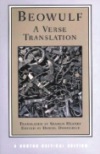 Beowulf:
A Verse Translation Beowulf:
A Verse Translation
Seamus Heaney (Translator)
Daniel Donoghue (Editor)
W.W. Norton & Company; December 2001
ISBN: 0393975800
Winner
of the Whitbread Prize, Seamus Heaney's translation "accomplishes
what before now had seemed impossible: a faithful rendering
that is simultaneously an original and gripping poem in its
own right". The translation is combined with first-rate
annotation. Heaney's clear and insightful introduction to
Beowulf provides readers with an understanding of both the
poem's history in the canon and Heaney's own translation process.
"Contexts" provides a rich selection of material
on Anglo-Saxon and early Northern culture. "Criticism"
features eight essays carefully chosen for their relevance
to undergraduate readers, including a full discussion of the
Old English poem that lies behind Heaney's translation. Contributors
include J.R.R. Tolkien, John Leyerle, Jane Chance, Roberta
Frank, Fred C. Robinson, Thomas Hill, Leslie Webster, and
Daniel Donoghue. A Glossary of Proper Names and a Selected
Bibliography are included.
 Ourika:
An English Translation Ourika:
An English Translation
Claire De Duras
John Fowles (Translator)
Modern Language Association; December 1994
ISBN: 0873527801
Ourika
is an amazing tale set in France during the French Revolution.
Published in 1823, de Duras' novel represents a number of
firsts: the first novel set in Europe to have a black heroine;
the first French literary work narrated by a black female;
and the first serious attempt by a white author to express
the feelings of a black character. The story is based on a
true account of a Senegalese girl, rescued from slavery and
raised by an aristocratic French family. When Ourika overhears
a conversation that makes her aware of her race and the prejudices
it produces, her reality is shattered. This revelation causes
her to become ill and she is no longer able to enjoy the lifestyle
to which she is accustomed. Her struggle to reject living
as a French woman and to exist as a black woman causes her
to choose an "invisible" subsistence by removing
mirrors and by wearing gloves to cover her hands and dresses
to hide her neck and arms. Her desire to be cured causes her
to seek medical attention. It is after her visits with the
doctor that her "happiness" is restored. This enchanting
story in this mind-blowing translation will be enjoyed by
all.
(Those
who want to know more about these books can email to sanyatsattar@hotmail.com)
Copyright (R)
thedailystar.net 2004
| 